Anesthesia | Eklavya Medical
vaccines
medical_services Main Specialty Domain lock Subscription Required

Anesthesia

Clinical anesthesiology, local and general anesthesia delivery systems, monitoring, and perioperative care.

verified Verified Medical Faculty menu_book 337 Q&A Modules
lock Protected Clinical Document • Pulse App • Screenshots Strictly Prohibited
QUESTION 1 person Asked by .
bookmark_add

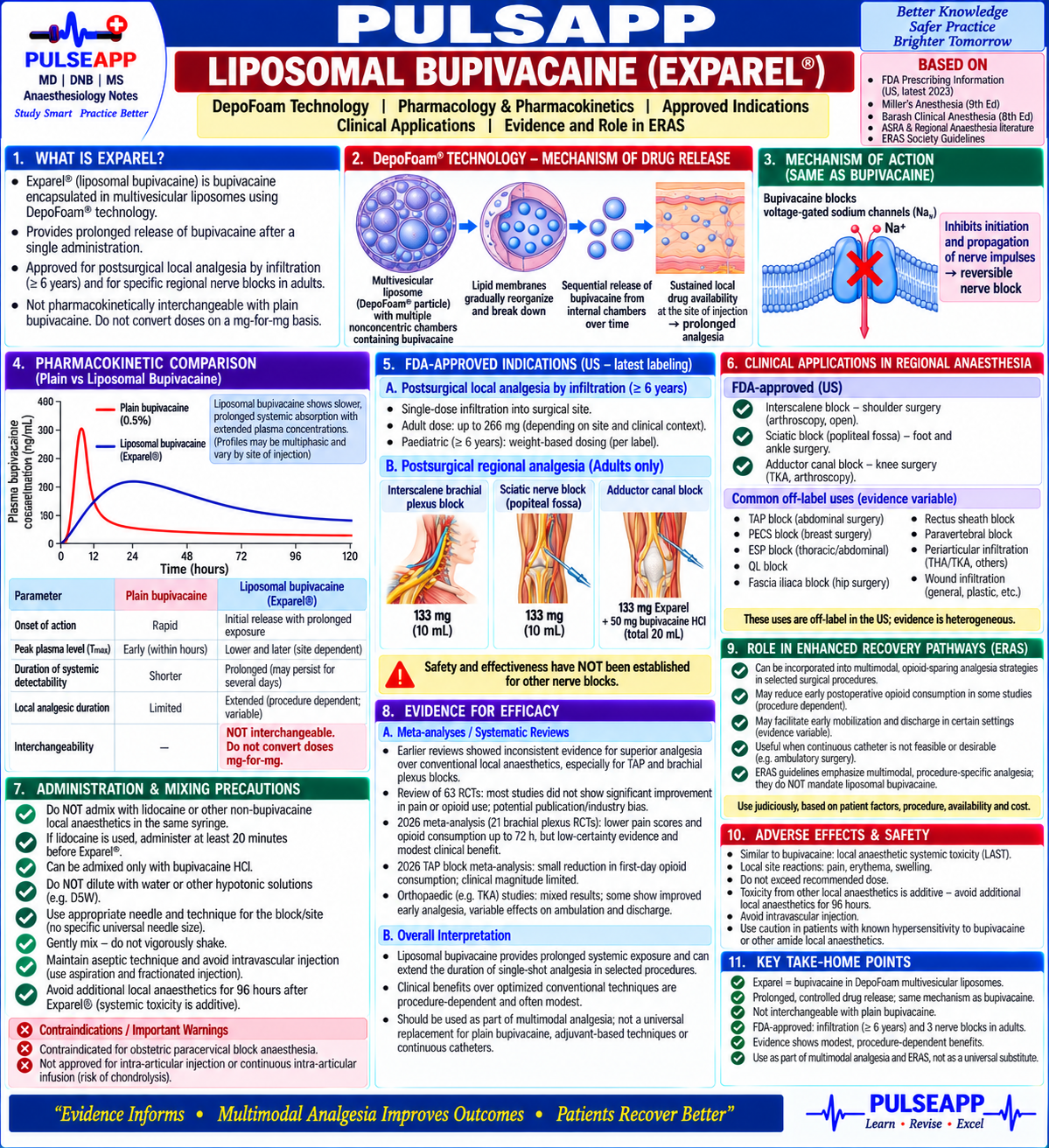
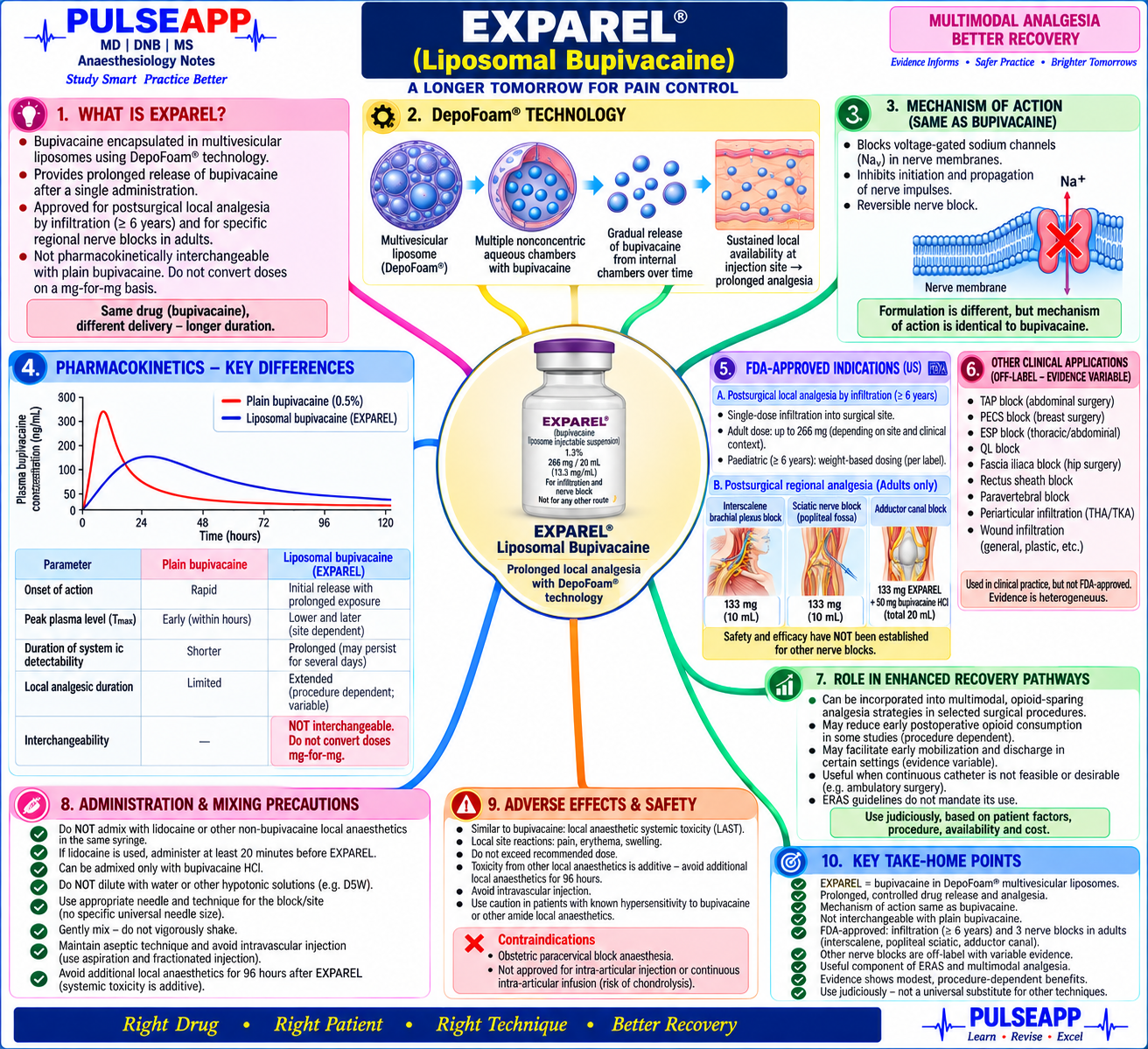
Describe the DepoFoam drug delivery mechanism of liposomal bupivacaine (Exparel). Explain its pharmacokinetic advantages over plain bupivacaine. Outline its approved indications, clinical applications in regional anaesthesia, and the evidence base for its use in enhanced recovery pathways.

collections Question Diagrams & Reference Images (2)
Question Reference Diagram
zoom_in View Image
Question Reference Diagram
zoom_in View Image
picture_as_pdf Clinical Reference Documents & PDFs (1)
Protected Inline Viewer
description JXM9bbc2FKhQKSd1r7WzYTI1NFMtt4uddX4skODE.pdf
lock Protected Clinical Document • Pulse App • Screenshots Strictly Prohibited
QUESTION 2 person Asked by .
bookmark_add

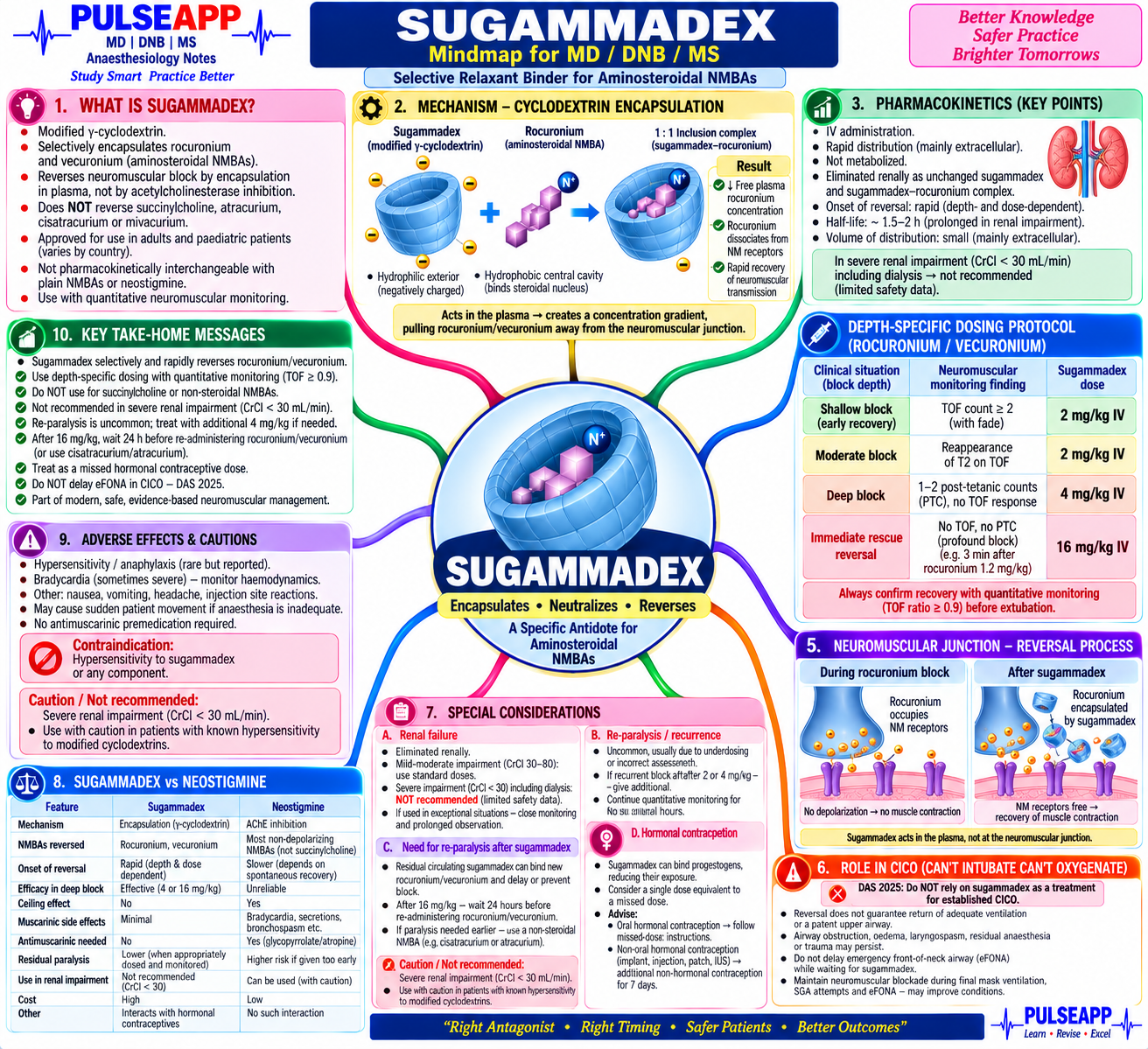
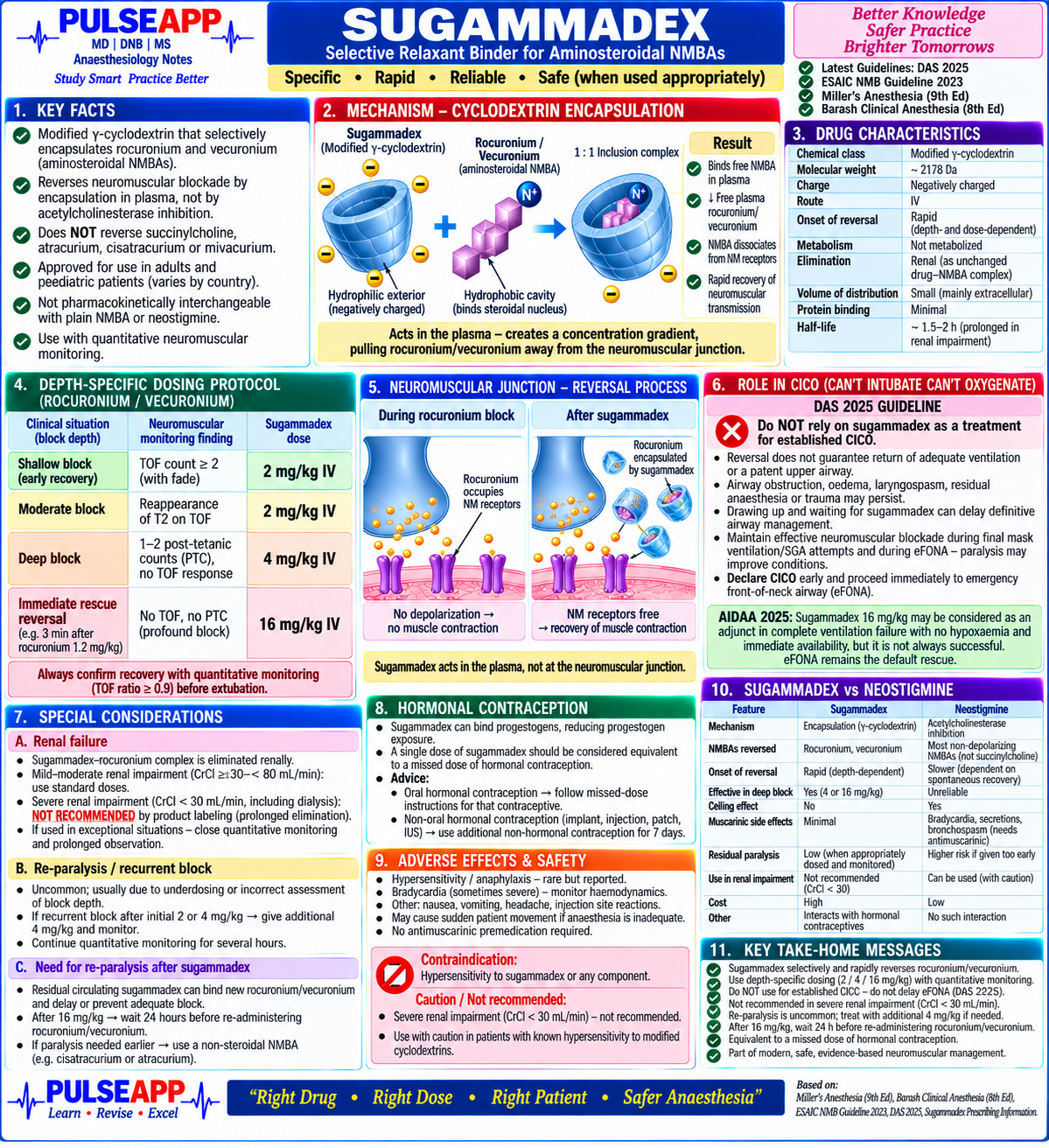
Describe the cyclodextrin mechanism of sugammadex. State the depth-specific dosing protocol. Explain its role in the CICO emergency. Discuss specific considerations including renal failure, re-paralysis, hormonal contraception, and comparison with neostigmine.

collections Question Diagrams & Reference Images (2)
Question Reference Diagram
zoom_in View Image
Question Reference Diagram
zoom_in View Image
description Clinical Response
⚙ Core Concept
Sugammadex physically encapsulates and removes rocuronium/vecuronium from the NMJ — providing complete, reliable reversal at ANY depth of block within 2–3 minutes. Rocuronium 1.2mg/kg + sugammadex 16mg/kg gives a 'fast-on, fast-off' combination with a safety profile equivalent to or better than succinylcholine for RSI.
A. Cyclodextrin Host-Guest Chemistry3 marks

Structure: modified gamma-cyclodextrin — 8 glucose units in a torus with hydrophobic interior and 8 negatively-charged side chains.

Mechanism: steroidal nucleus of rocuronium docks into the hydrophobic cavity → 1:1 inclusion complex (essentially irreversible) → encapsulated rocuronium inaccessible to NMJ → plasma level falls → rocuronium dissociates from receptors → block reversed.

Specificity: works on aminosteroid NMBs only (rocuronium>vecuronium>pancuronium); CANNOT reverse benzylisoquinoliniums (atracurium, cisatracurium).

B. Depth-Specific Dosing3 marks
ScenarioMonitor StatusDoseRecovery to TOFR≥0.9
Routine reversalTOF count ≥22 mg/kg IV~3 min
Deep blockPTC 1–24 mg/kg IV~3–4 min
CICO emergency (immediate)Profound block (PTC=0,TOF=0)16 mg/kg IV push~2–3 min
⚠ Dose by Actual Body Weight
Underdosing causes incomplete reversal/re-paralysis; 120kg patient at 16mg/kg needs ~13 vials — ensure emergency stock.
C. Role in CICO Emergency2 marks
✅ Rocuronium-Sugammadex Safety Advantage
16mg/kg reverses profound block faster than succinylcholine's spontaneous offset (~10 min), with none of succinylcholine's contraindications.

DAS 2015: sugammadex 16mg/kg given SIMULTANEOUSLY with FONA preparation, not as an alternative to it.

D. Specific Pharmacological Considerations2 marks
ConsiderationDetail
Renal failureComplex excreted renally; risk of dissociation/re-paralysis in severe impairment — use with caution, extended monitoring
Re-paralysisNo rocuronium for 24h after 16mg/kg dose; use cisatracurium if re-paralysis needed sooner
Hormonal contraceptionMay bind progesterone — equivalent to missing 1 OCP dose; advise additional contraception for 7 days
ToremifeneCompetes for cyclodextrin cavity — may reduce reversal efficacy; avoid
vs NeostigmineSugammadex works at any depth, no anticholinergic needed, reliably achieves TOFR≥0.9; neostigmine only works if TOF≥2
🎤 Viva Corner
Q. Why can sugammadex reverse rocuronium but not atracurium?
Sugammadex's cyclodextrin cavity is shaped for the steroidal nucleus of aminosteroid NMBs. Atracurium is a benzylisoquinolinium (no steroid ring) and cannot form an inclusion complex. Atracurium is reversed with neostigmine 0.04–0.07mg/kg + glycopyrrolate, effective only if TOF≥2.
Q. A woman on OCP receives sugammadex 4mg/kg. What counselling is required?
Sugammadex can bind progesterone, reducing free plasma levels equivalent to missing one OCP dose. Advise additional (barrier) contraception for 7 days while continuing the OCP as normal; document verbally and in writing.
★ Examiner's Pearl
State the three depth-specific doses (2/4/16mg/kg) with their exact monitoring triggers. 8 glucose units in the cyclodextrin ring is a tested factual detail. Cover all four special considerations: renal failure, re-paralysis, OCP, toremifene.
Naguib M (Anesth Analg 2007). DAS Guidelines 2015 (BJA 2015). Bridion PI, Merck/MSD 2021. Bom A et al (Angew Chem 2002).
picture_as_pdf Clinical Reference Documents & PDFs (1)
Protected Inline Viewer
description HqjfkSfr2ICGKq8yPTrWsm8ZBzc4VqdFfR01ryZD.pdf
lock Protected Clinical Document • Pulse App • Screenshots Strictly Prohibited
QUESTION 3 person Asked by .
bookmark_add

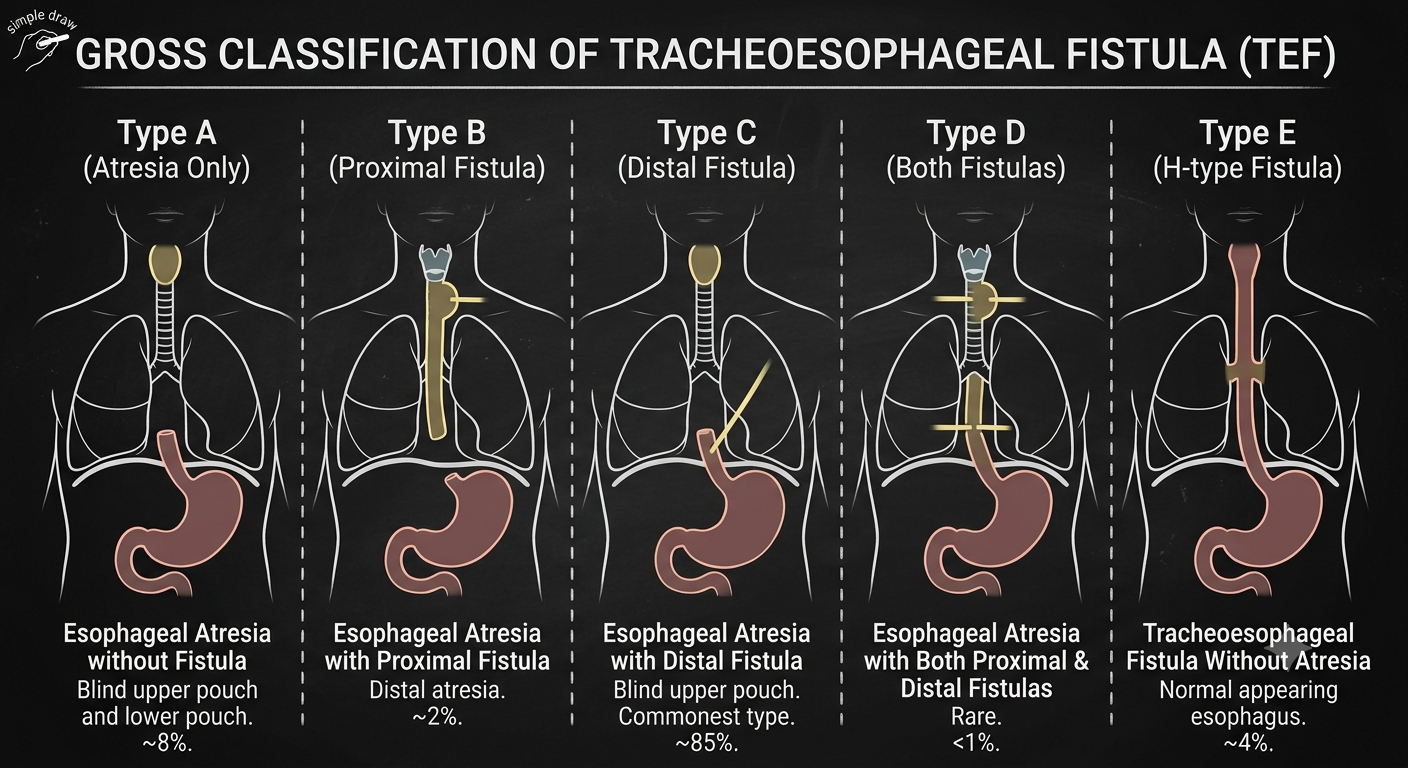
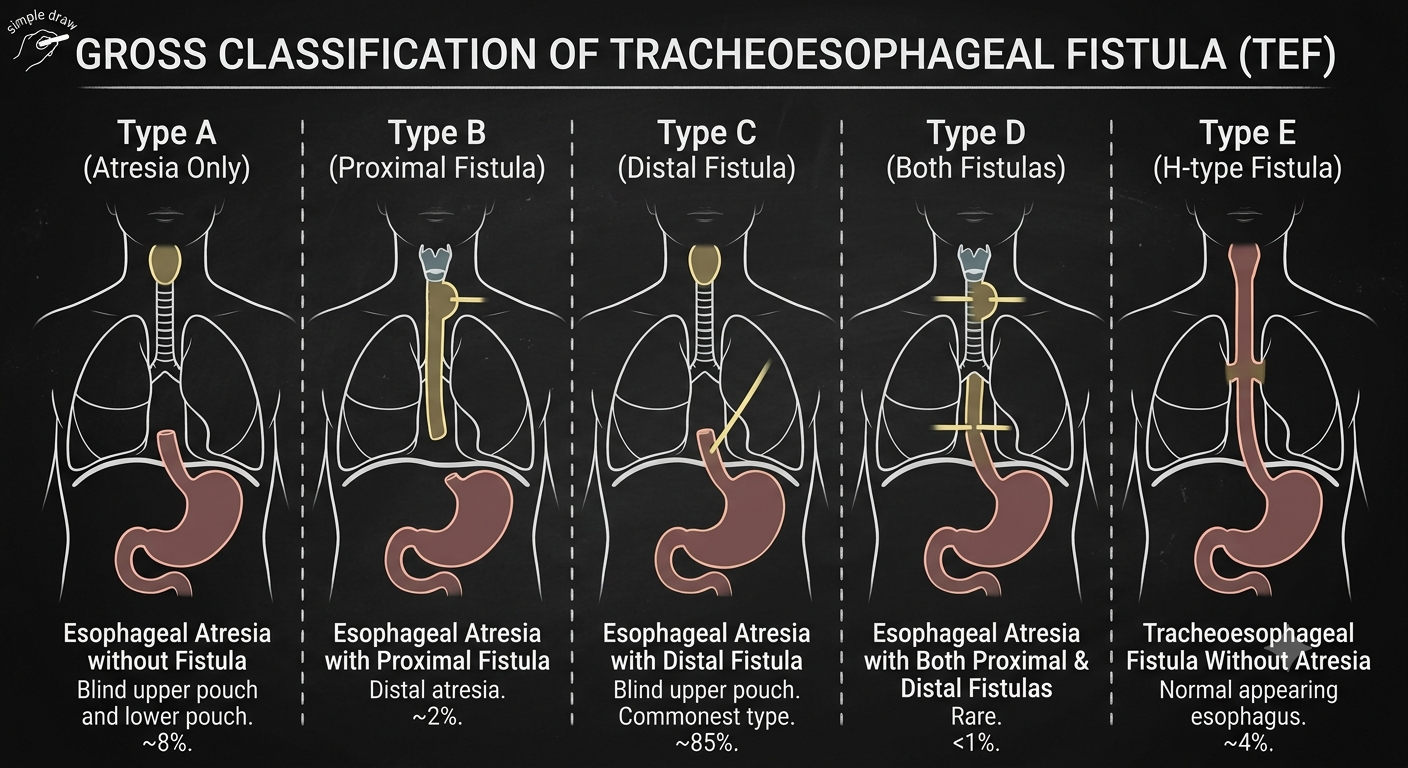
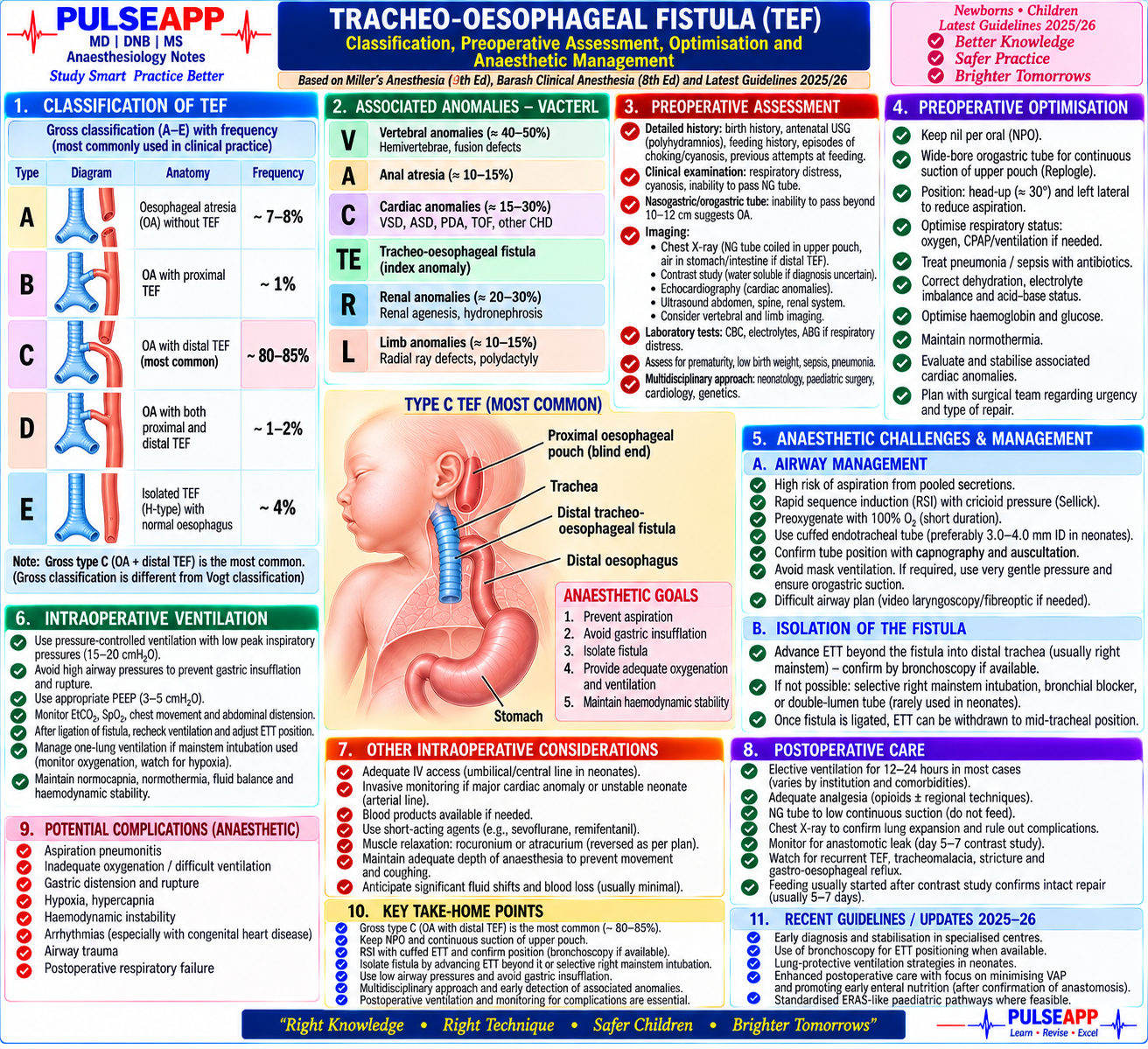
Classify TEF. Describe the preoperative assessment, optimisation, and specific anaesthetic challenges including: airway management, isolation of the fistula, intraoperative ventilation, and postoperative care.

collections Question Diagrams & Reference Images (3)
Question Reference Diagram
zoom_in View Image
Question Reference Diagram
zoom_in View Image
Question Reference Diagram
zoom_in View Image
description Clinical Response
⚙ Core Concept
Tracheo-oesophageal fistula repair is among the most challenging neonatal anaesthetic scenarios: positive-pressure ventilation through a normal ETT may insufflate gas through the fistula into the stomach, rupturing it. Every step from induction to ventilation must account for this.
A. Classification (Gross/Ladd)2 marks
TypeDescriptionIncidence
AOesophageal atresia alone, no fistula7%
BOA with proximal TEF1%
C (most common)OA with DISTAL TEF — highest risk of gastric insufflation87%
DOA with both proximal and distal TEF1%
E (H-type)TEF without OA; intact oesophagus; delayed diagnosis4%
B. Associated Anomalies & Preop Assessment2 marks

VACTERL: ~50% have associated anomalies — Vertebral, Anal atresia, Cardiac (~35%, most important), TE fistula, Renal, Limb.

Echocardiogram (mandatory, determines side of thoracotomy); CXR; renal USS; spinal X-ray; blood glucose monitoring.

Optimisation: head-up 30°; continuous Replogle tube suction of upper pouch; IV access; delay surgery if severe RDS/prematurity.

C. Anaesthetic Management5 marks
⚠ The TEF Ventilation Problem
In Type C, PPV via ETT above the fistula preferentially ventilates the fistula+stomach → gastric distension → diaphragm elevation → further impairs ventilation → perforation. Goal: place ETT tip DISTAL to the fistula.

Induction: avoid bag-mask ventilation; inhalational induction maintaining spontaneous ventilation; intubate WITHOUT NMB; advance ETT into right main bronchus then withdraw until bilateral breath sounds heard (tip just above carina, distal to fistula), or use fibreoptic bronchoscope directly.

Ventilation: lowest peak pressure maintaining SpO₂/ETCO₂; permissive hypercapnia (PaCO₂ 50–60); if gastric distension → emergency gastrostomy.

Postop: elective ventilation 24–72h; neck flexed 7–10 days; parenteral nutrition; monitor for anastomotic leak and tracheomalacia.

🎤 Viva Corner
Q. During Type C TEF repair, the abdomen distends despite correct ETT positioning. What has happened and what are immediate steps?
Gas is still reaching the stomach — either ETT tip has migrated above the fistula, or a second unsuspected fistula exists. Steps: reduce ventilatory pressure to minimum effective/allow spontaneous ventilation; ask surgeon to manually occlude the fistula; emergency gastrostomy if distension critical; reconfirm ETT position with fibreoptic bronchoscopy. Do NOT increase pressures to overcome distension — this worsens it.
★ Examiner's Pearl
Type C (87%) is the only type where PPV inflates the stomach — state this mechanism explicitly. The technique of positioning ETT below the fistula (advance into right main bronchus then withdraw) is the specific technique tested. VACTERL with cardiac (35%) as most important.
Spitz L (Orphanet J Rare Dis 2007). Cote CJ et al, A Practice of Anaesthesia for Infants and Children, 6th Ed. Andropoulos DB et al (Pediatr Anaesth 1998). Miller's Anaesthesia 9th Ed, Ch 93.
picture_as_pdf Clinical Reference Documents & PDFs (1)
Protected Inline Viewer
description pSc3I6NhlDDMK07LSMzfzFW4lMf3NmwzbvLqPBJW.pdf
lock Protected Clinical Document • Pulse App • Screenshots Strictly Prohibited
QUESTION 4 person Asked by .
bookmark_add

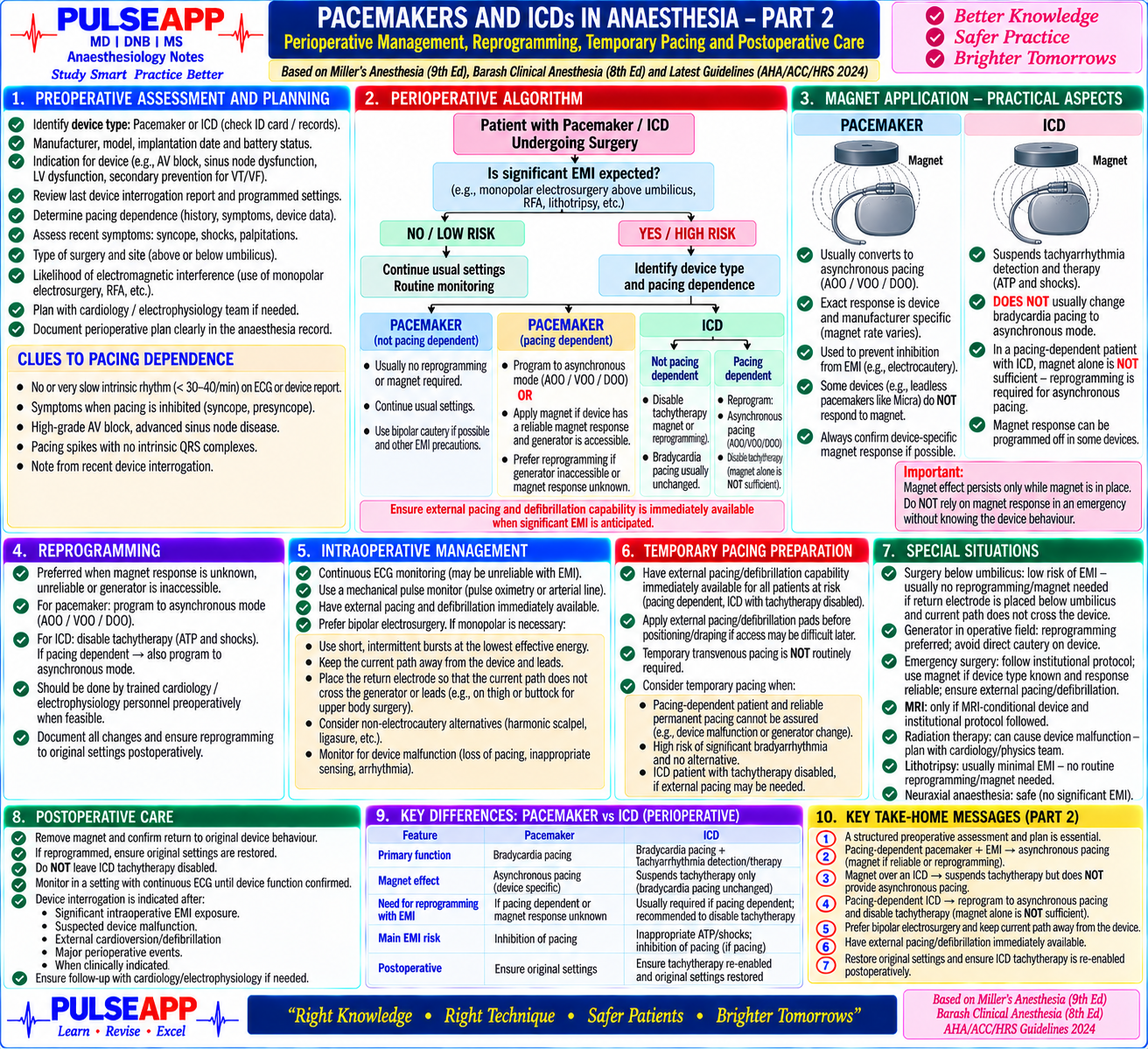
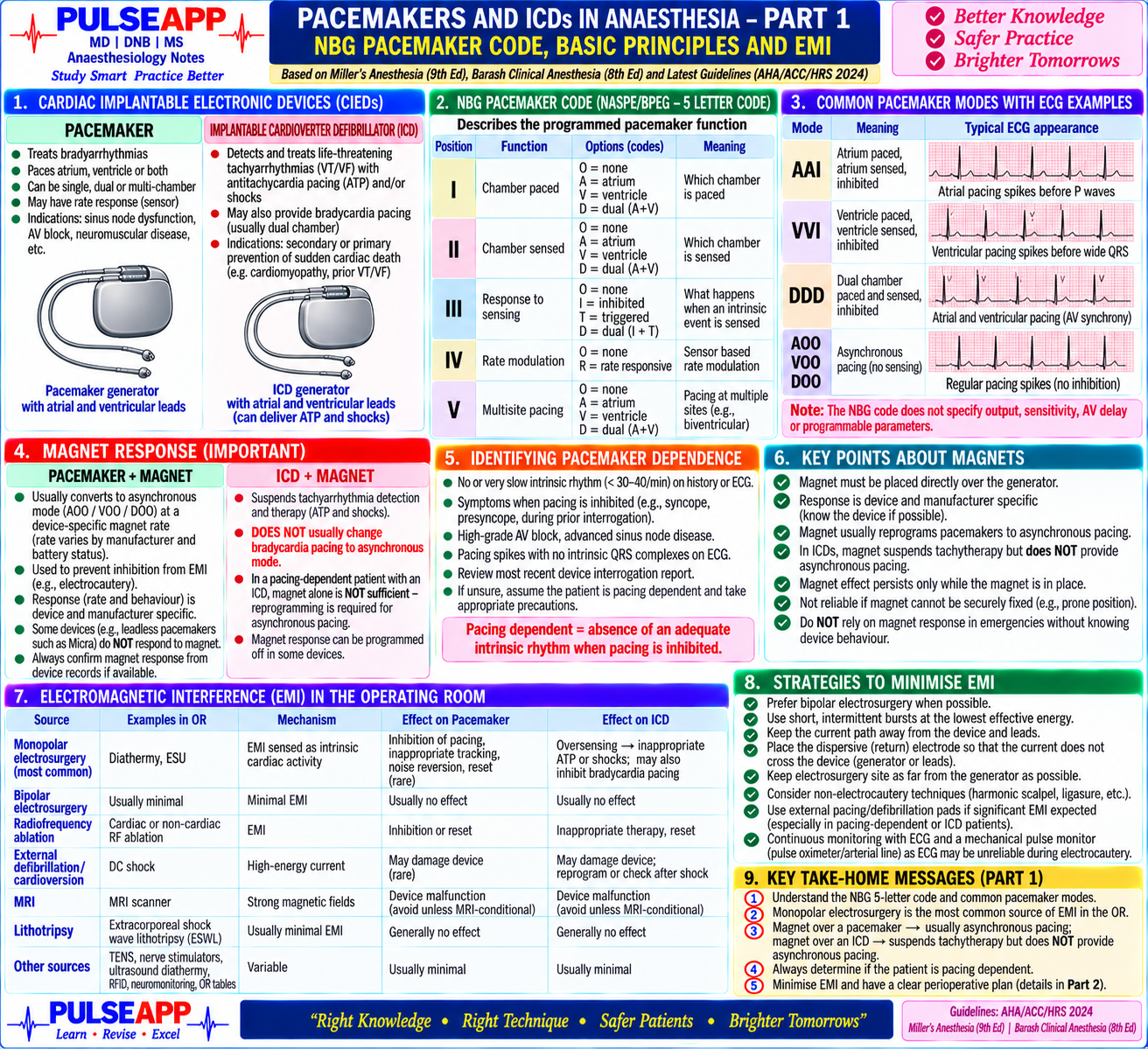
Describe the NBG pacemaker code. Discuss electromagnetic interference (EMI) sources in the OR and their effects on pacemakers and ICDs. Outline perioperative management including magnet application, reprogramming, and temporary pacing preparation.

collections Question Diagrams & Reference Images (2)
Question Reference Diagram
zoom_in View Image
Question Reference Diagram
zoom_in View Image
description Clinical Response
⚙ Core Concept
Over 3 million new cardiac devices are implanted globally per year. Surgical diathermy is the most common and dangerous EMI source — it can inhibit pacemaker output (causing asystole in dependent patients), trigger inappropriate ICD shocks, or damage device circuitry.
A. NBG Pacemaker Code2 marks
PositionI — PacedII — SensedIII — ResponseIV — Rate Modulation
LettersO/A/V/DO/A/V/DO/Inhibited/Triggered/DualO/Rate-modulated
VVI exampleV pacedV sensedInhibited
DDD exampleBoth pacedBoth sensedInhibited+Triggered

VOO/DOO = asynchronous (fixed rate) modes used under magnet; VVIR = VVI with rate-adaptive function.

B. EMI — Sources and Effects3 marks
SourceEffect on PacemakerEffect on ICD
Monopolar diathermy (most dangerous)EMI sensed as native activity → output INHIBITED → asystole if dependentInterpreted as VF → inappropriate high-energy shock
Bipolar diathermyMinimal risk (localised current)Minimal risk; preferred
MRIReed switch activation, rapid pacing, lead heating unless MRI-conditionalInappropriate shock; generally contraindicated unless conditional
Peripheral nerve stimulatorLow risk; use opposite side from device
C. Perioperative Management Protocol5 marks

Preop: identify device type; determine pacemaker-dependency; contact device clinic for reprogramming to asynchronous mode if monopolar diathermy planned; deactivate ICD anti-tachycardia therapy before surgery.

✅ What a Magnet Does (and Does NOT Do)
Magnet on pacemaker → asynchronous (VOO) pacing, prevents inhibition. Magnet on ICD → suspends shock therapy only, does NOT convert to pacing mode. Remove magnet promptly after surgery.

Intraoperative: use bipolar diathermy where possible; short bursts <5s, minimum power, return pad away from device; external pacing/defibrillation immediately available; continuous ECG + SpO₂.

Postop: device interrogated and reprogrammed to original settings; document management in anaesthetic record.

🎤 Viva Corner
Q. A VVIR pacemaker-dependent patient with complete heart block undergoes open cholecystectomy; surgeon requests monopolar diathermy. Risks and management?
Risk: diathermy inhibits VVI pacing during each burst causing potential asystole with no underlying rhythm. Management: reprogram to VOO (asynchronous) preoperatively if possible; otherwise apply and tape a ring magnet over the generator throughout the case, confirm asynchronous pacing on ECG. Use short diathermy bursts, minimum power, return pad on thigh; have external pacing/defibrillator ready. Postop: interrogate device, restore VVIR mode.
★ Examiner's Pearl
NBG code (I=paced, II=sensed, III=response) with VVI/DDD examples must be reproduced correctly. Magnet effect distinction (pacemaker→asynchronous pacing; ICD→suspends shock only) is the most tested/confused fact. Monopolar inhibits pacemaker/triggers ICD shock; bipolar minimal risk.
Crossley GH et al, HRS/ASA Consensus (Heart Rhythm 2011). Miller's Anaesthesia 9th Ed. Gilmore JA (BJA Educ 2013).
picture_as_pdf Clinical Reference Documents & PDFs (1)
Protected Inline Viewer
description 7uoNc0O5g8JXcKBb89CZPq8TDdTEL060JfPlqXFh.pdf
lock Protected Clinical Document • Pulse App • Screenshots Strictly Prohibited
QUESTION 5 person Asked by .
bookmark_add

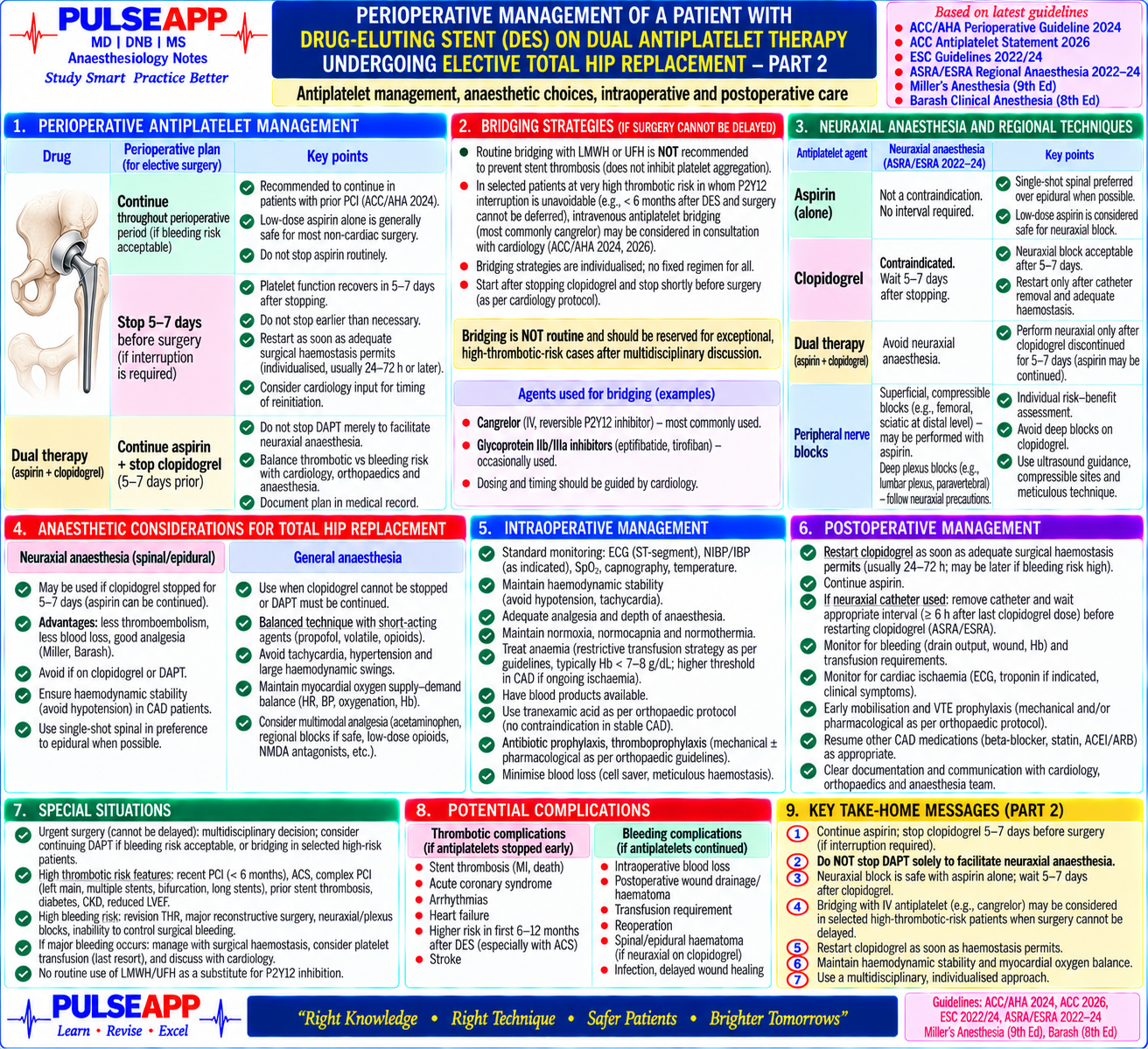
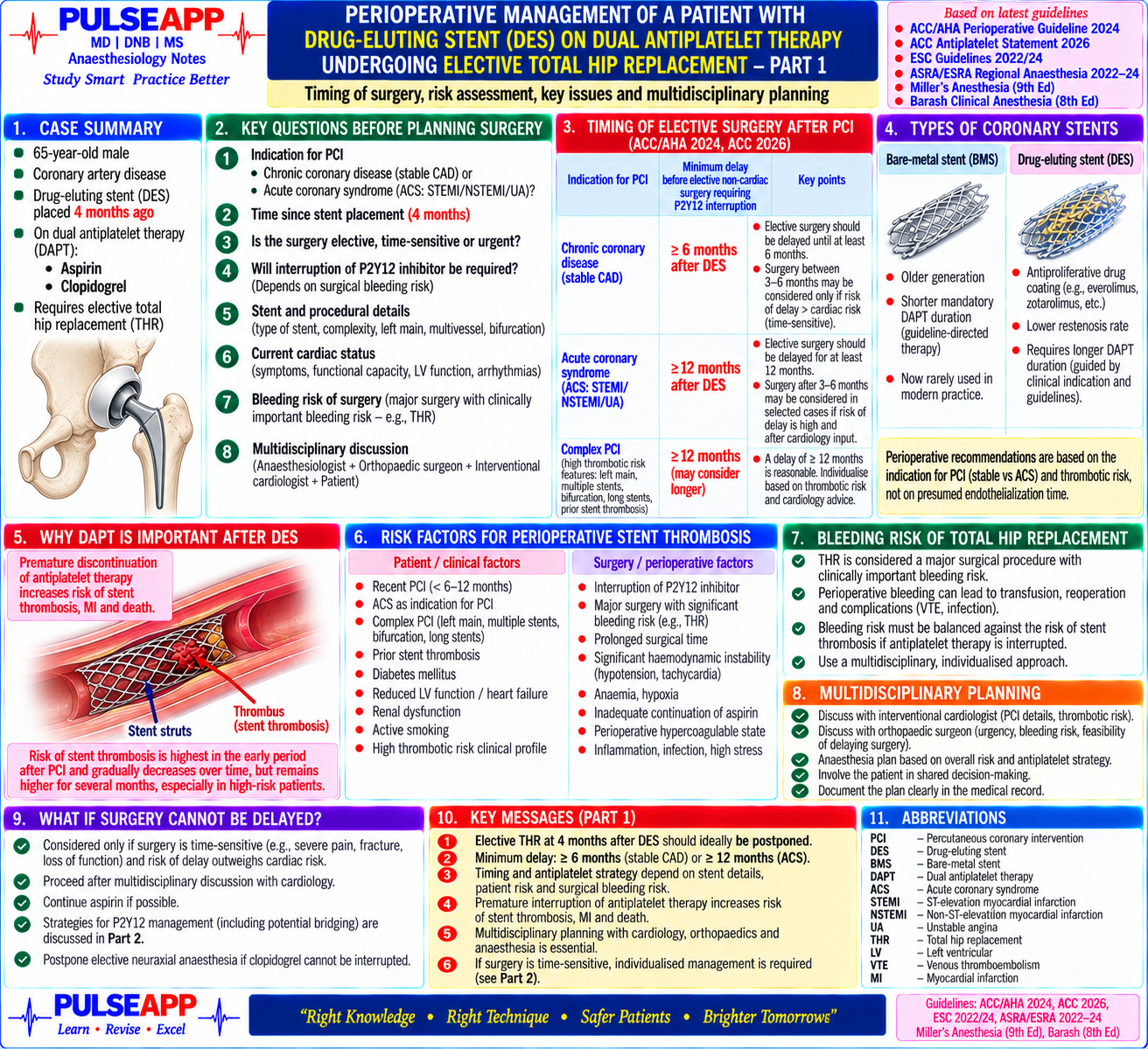
A 65-year-old male with CAD and a drug-eluting stent (DES) placed 4 months ago on dual antiplatelet therapy (aspirin + clopidogrel) requires elective total hip replacement. Discuss the perioperative management challenges, timing of surgery, antiplatelet strategy, and anaesthetic choices.

collections Question Diagrams & Reference Images (2)
Question Reference Diagram
zoom_in View Image
Question Reference Diagram
zoom_in View Image
description Clinical Response
⚙ Core Concept
The recent-DES patient on DAPT sits at the crossroads of two catastrophic risks: stopping antiplatelets risks stent thrombosis (mortality ~45%); continuing DAPT risks major surgical haemorrhage. Timing, stent type, and surgery type all determine strategy — requiring cardiology, surgery, and anaesthesia multidisciplinary input.
A. Timing of Surgery After DES2 marks
Stent TypeMinimum IntervalRationale
Bare Metal Stent4–6 weeks (preferably 3 months)Endothelialisation complete by 4 weeks
DES 1st gen12 monthsIncomplete endothelialisation persists up to 12 months
DES 2nd gen6 months (3 months acceptable per 2022 ESC if unavoidable)Faster endothelialisation with newer stents
⚠ This Patient — 4 Months Post-DES
Highest risk period; stopping clopidogrel risks acute stent thrombosis (1–5%, ~45% mortality). Elective THR should be DEFERRED to ≥6 months; if urgent, multidisciplinary team decision required.
B. DAPT Management Strategy If Surgery Proceeds3 marks

Aspirin: continue throughout — incremental bleeding risk modest vs high thrombosis risk if stopped.

Clopidogrel: if surgery can wait — defer to ≥6 months, then stop 5 days before surgery. If cannot defer — cardiologist involvement; bridging with IV GPIIb/IIIa inhibitors is observational-evidence only and largely not recommended by current ACC/AHA guidance; if continued through surgery — accept higher bleeding risk, use cell salvage, avoid neuraxial.

C. Anaesthetic Technique3 marks
TechniqueAdvantagesDAPT Considerations
Spinal (preferred for THR)↓blood loss ~30%, ↓DVT/PE, ↓PONVSafe if clopidogrel stopped ≥5 days; contraindicated if continued
General anaesthesiaNo epidural haematoma risk regardless of antiplatelet statusHigher blood loss, more PONV
D. BCIS Prevention & Postop2 marks

Standard cemented THR BCIS protocol: FiO₂ 1.0 pre-cementation, fluid preload, ephedrine ready, canal lavage, venting.

VTE prophylaxis: mechanical from induction; LMWH from 12h postop, coordinated with haematology if clopidogrel continued.

🎤 Viva Corner
Q. What is stent thrombosis and why does it carry such high mortality?
Sudden coronary stent occlusion from premature antiplatelet discontinuation on an incompletely-endothelialised stent — exposed thrombogenic struts trigger rapid platelet aggregation causing sudden complete occlusion (unlike gradual plaque rupture), with no time for collateral development. Mortality ~20–45%, reflecting abruptness, frequency of cardiogenic shock, and difficulty of emergency revascularisation, especially perioperatively when the patient may already be haemodynamically compromised.
★ Examiner's Pearl
State minimum interval after DES (6 months newer-gen; 12 months older-gen) with rationale. Stent thrombosis mortality (~45%) is a specific tested statistic. DAPT strategy table with exact timeframes must be reproduced.
Fleisher LA et al (JACC 2014). Kristensen SD et al, ESC/ESA 2022 (Eur Heart J 2022). Levine GN et al (JACC 2016). Grines CL et al (JACC 2007).
picture_as_pdf Clinical Reference Documents & PDFs (1)
Protected Inline Viewer
description F2KpAtLk2HyiKHDJ3PpCiJbUIx6rJzIV3wrWLdyD.pdf
lock Protected Clinical Document • Pulse App • Screenshots Strictly Prohibited
QUESTION 6 person Asked by .
bookmark_add

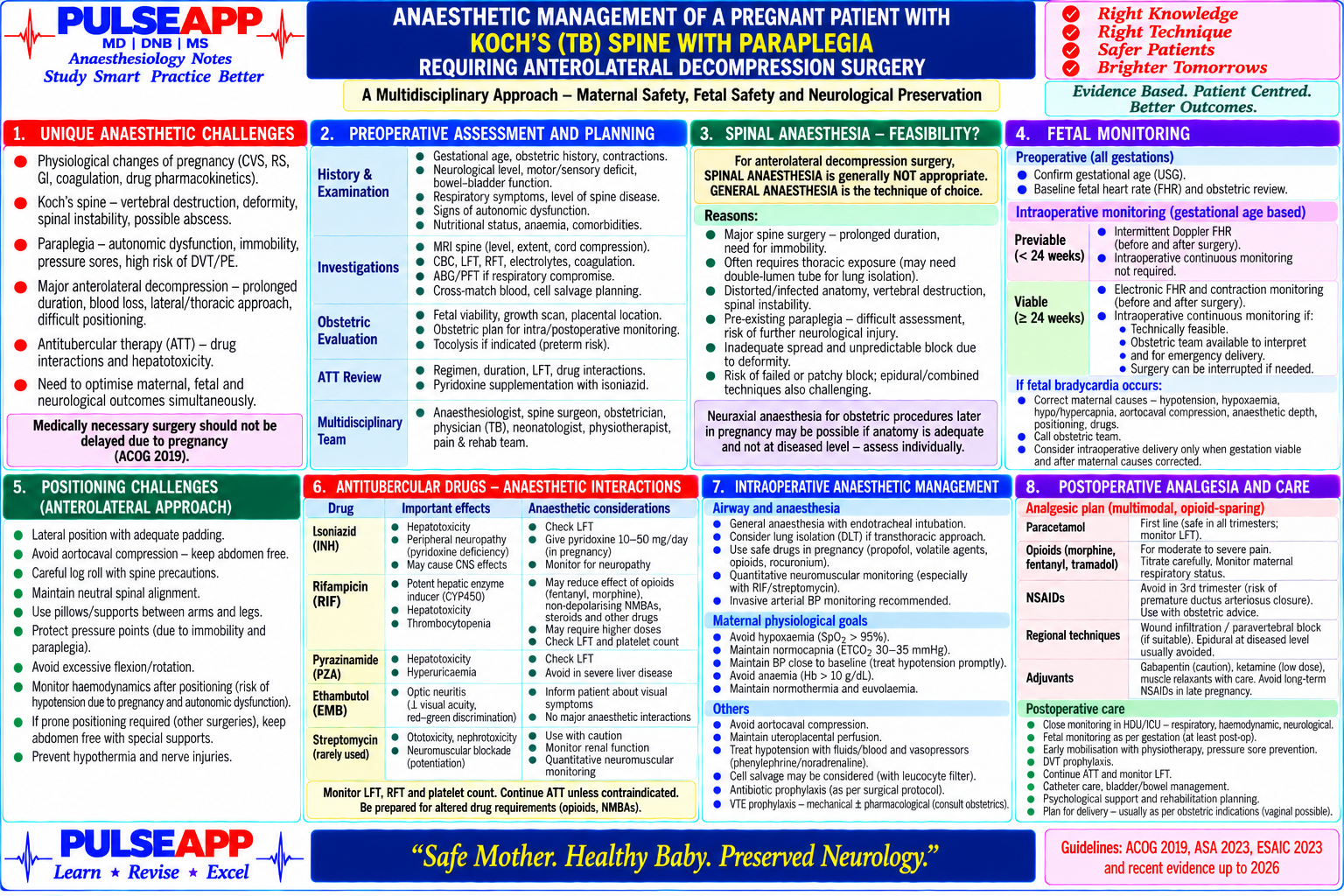
Discuss the unique anaesthetic challenges of a pregnant patient with Koch's (TB) spine causing paraplegia requiring anterolateral decompression surgery. Address: spinal anaesthesia feasibility, fetal monitoring, positioning challenges, antitubercular drug interactions, and postoperative pain management.

description Clinical Response
⚙ Core Concept
This case represents convergence of three high-risk states simultaneously: Pott's disease causing cord compression/paraplegia requiring urgent decompression; pregnancy (altered pharmacokinetics, airway, cardiovascular reserve); and chronic ATT effects on hepatic enzyme induction and drug metabolism.
A. Preoperative Assessment2 marks

Neurological: document level/completeness of paraplegia; autonomic dysreflexia risk if lesion above T6.

Obstetric: gestational age; fetal wellbeing; obstetric team involvement; emergency CS plan.

TB status: which ATT drugs (HRZE); liver function (rifampicin hepatotoxicity); sputum status.

Drug interactions: rifampicin is a potent CYP450 inducer → reduces duration of opioids, NMBs (vecuronium); minimal effect on volatiles.

B. Airway and Positioning3 marks

Pregnancy: oedematous airway, reduced FRC, rapid desaturation, aspiration risk → RSI protocol mandatory.

⚠ Neuraxial NOT Suitable as Primary
Spinal TB at the surgical level makes spinal/epidural technically impossible and contraindicated at that level.

Positioning: lateral decubitus for anterolateral decompression — maintain left lateral tilt even in lateral position to avoid aortocaval compression.

C. Intraoperative Management3 marks

GA with RSI: antacid prophylaxis; rocuronium 1.2mg/kg (avoid succinylcholine if paraplegia >6 months — hyperkalaemia risk).

Maintenance: sevoflurane <1MAC; avoid N₂O; maternal MAP ≥65mmHg for uteroplacental perfusion.

Continuous CTG intraoperatively if >24 weeks gestation; emergency CS trolley/neonatology on standby.

NMB dosing: rifampicin shortens vecuronium/rocuronium duration — monitor with quantitative TOF; reverse with sugammadex.

D. Postoperative Management2 marks

Analgesia: IV morphine PCA; avoid NSAIDs >32 weeks (ductus arteriosus closure).

TB precautions: respiratory isolation, staff PPE, resume ATT within 24–48h.

Continuous CTG 24h postop; VTE prophylaxis (paraplegia + pregnancy = very high risk).

🎤 Viva Corner
Q. Why is succinylcholine specifically dangerous in a patient with thoracic paraplegia of 8 months duration?
Denervation causes massive upregulation of extrajunctional AChRs across the entire muscle membrane (not just the NMJ). Succinylcholine depolarises this vastly expanded receptor population → massive K⁺ efflux (5–10 mEq/L rise within seconds) → life-threatening hyperkalaemic cardiac arrest, often irreversible. Risk persists indefinitely after 2–3 weeks of denervation, greatest with large muscle mass involvement. Use rocuronium 1.2mg/kg with sugammadex available instead.
★ Examiner's Pearl
Succinylcholine-hyperkalaemia mechanism in paraplegia (extrajunctional AChR upregulation, K⁺ rise 5–10 mEq/L) is the most tested safety fact. Rifampicin CYP induction shortening NMB duration is the drug interaction most tested.
Gronert GA (Anesthesiology 1975). Miller's Anaesthesia 9th Ed. Stoelting RK, Coexisting Disease in Anesthesia, 4th Ed. Subramaniam R et al (Anaesthesia 2001).
lock Protected Clinical Document • Pulse App • Screenshots Strictly Prohibited
QUESTION 7 person Asked by .
bookmark_add

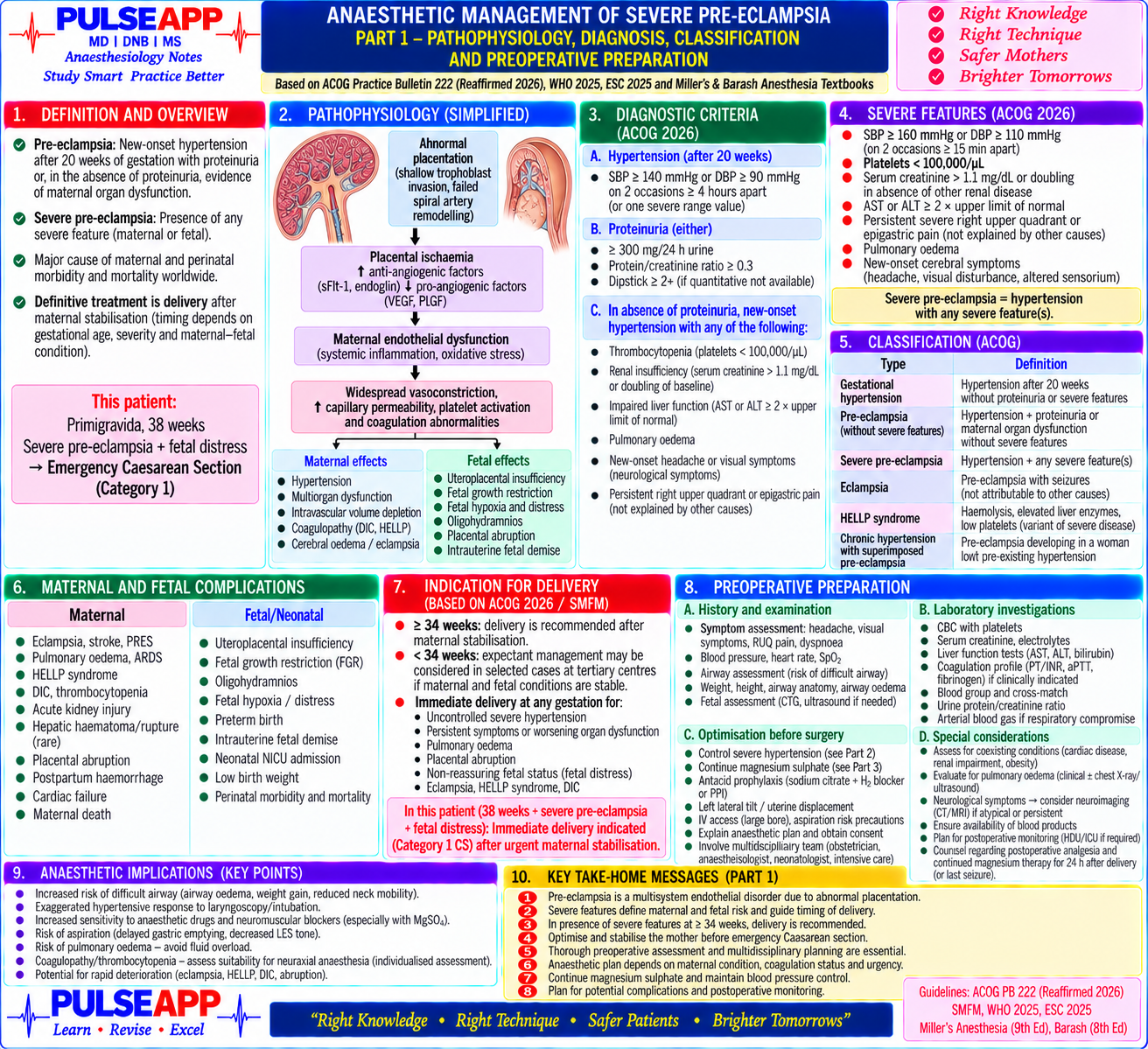
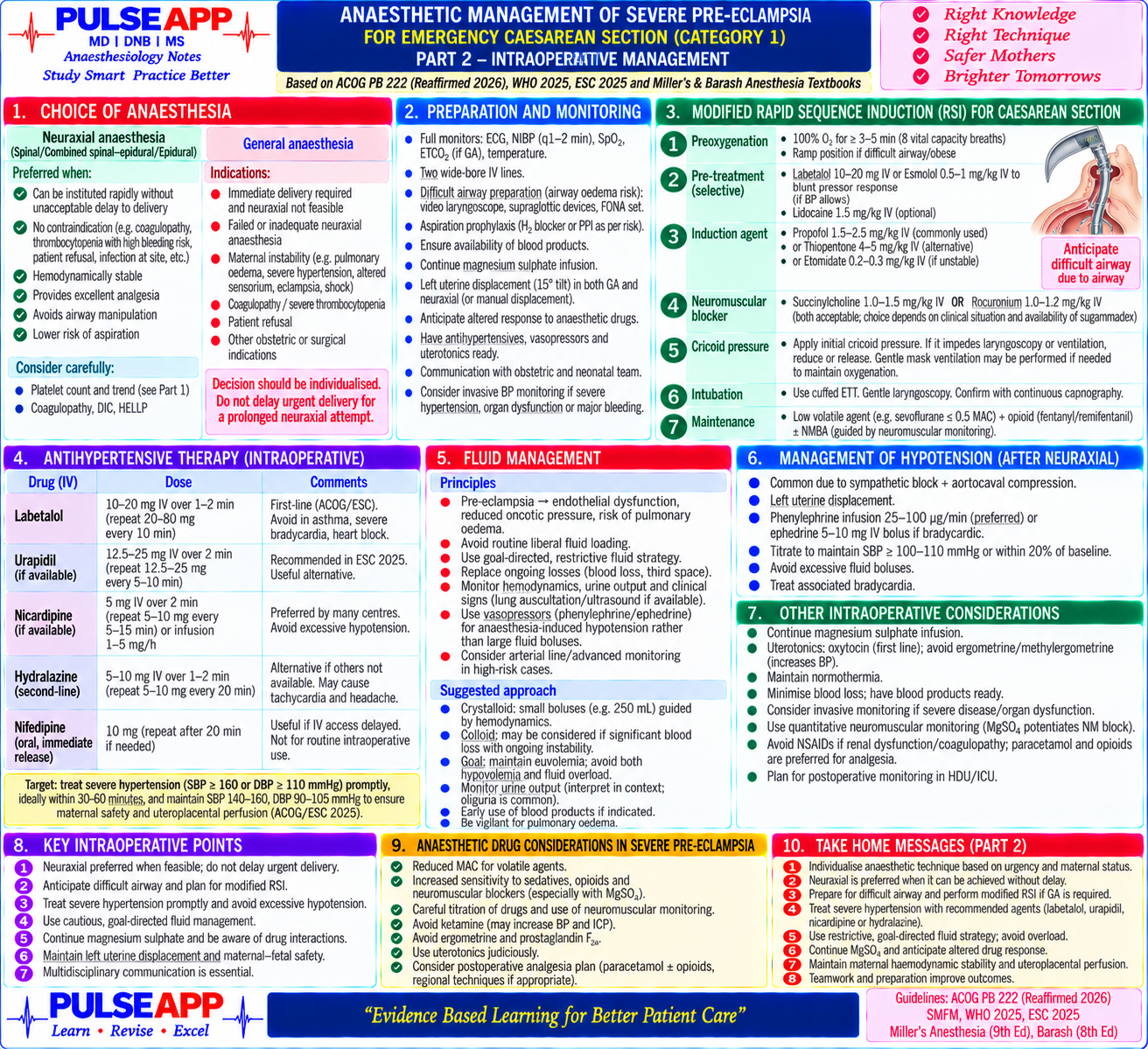
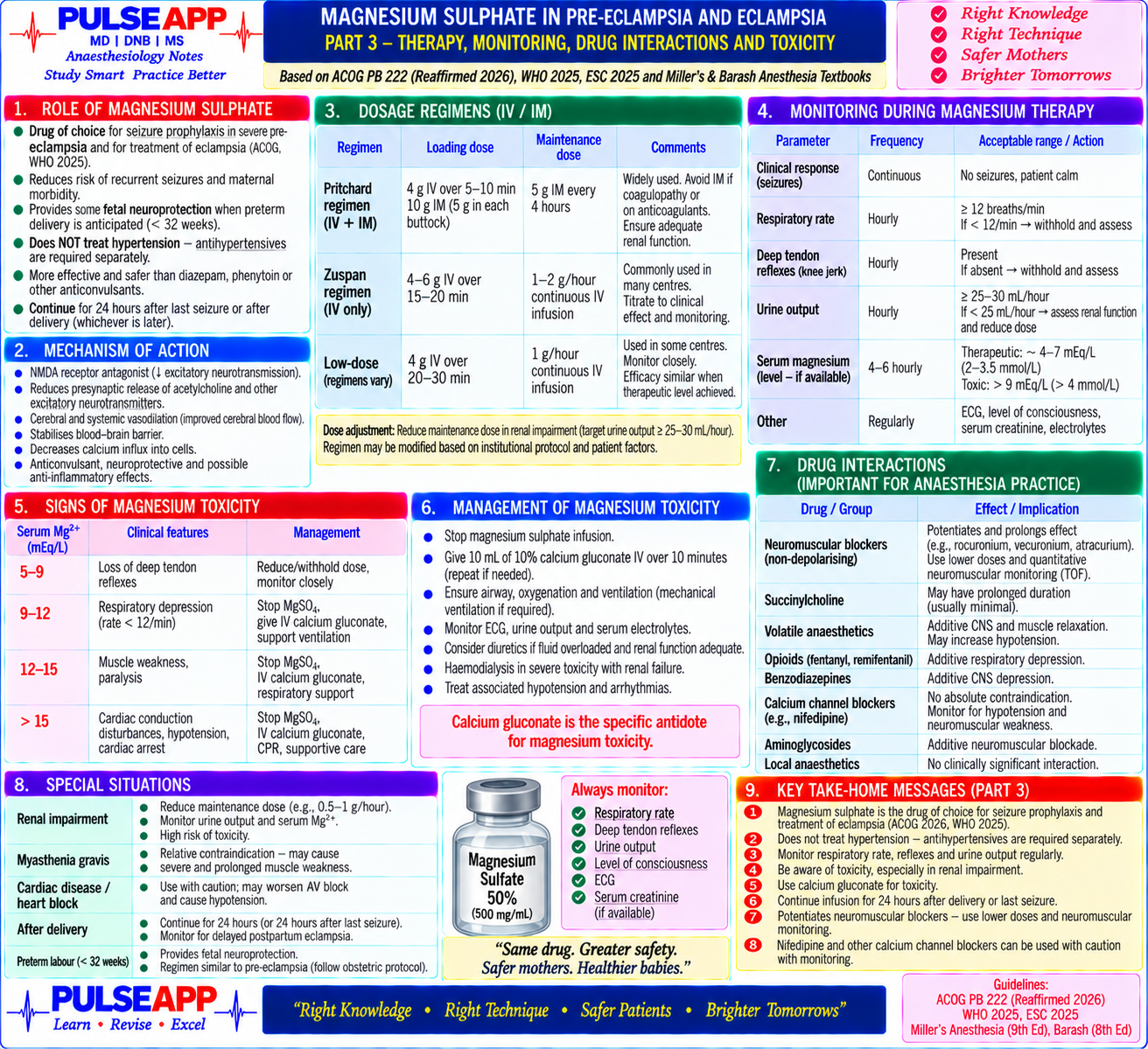
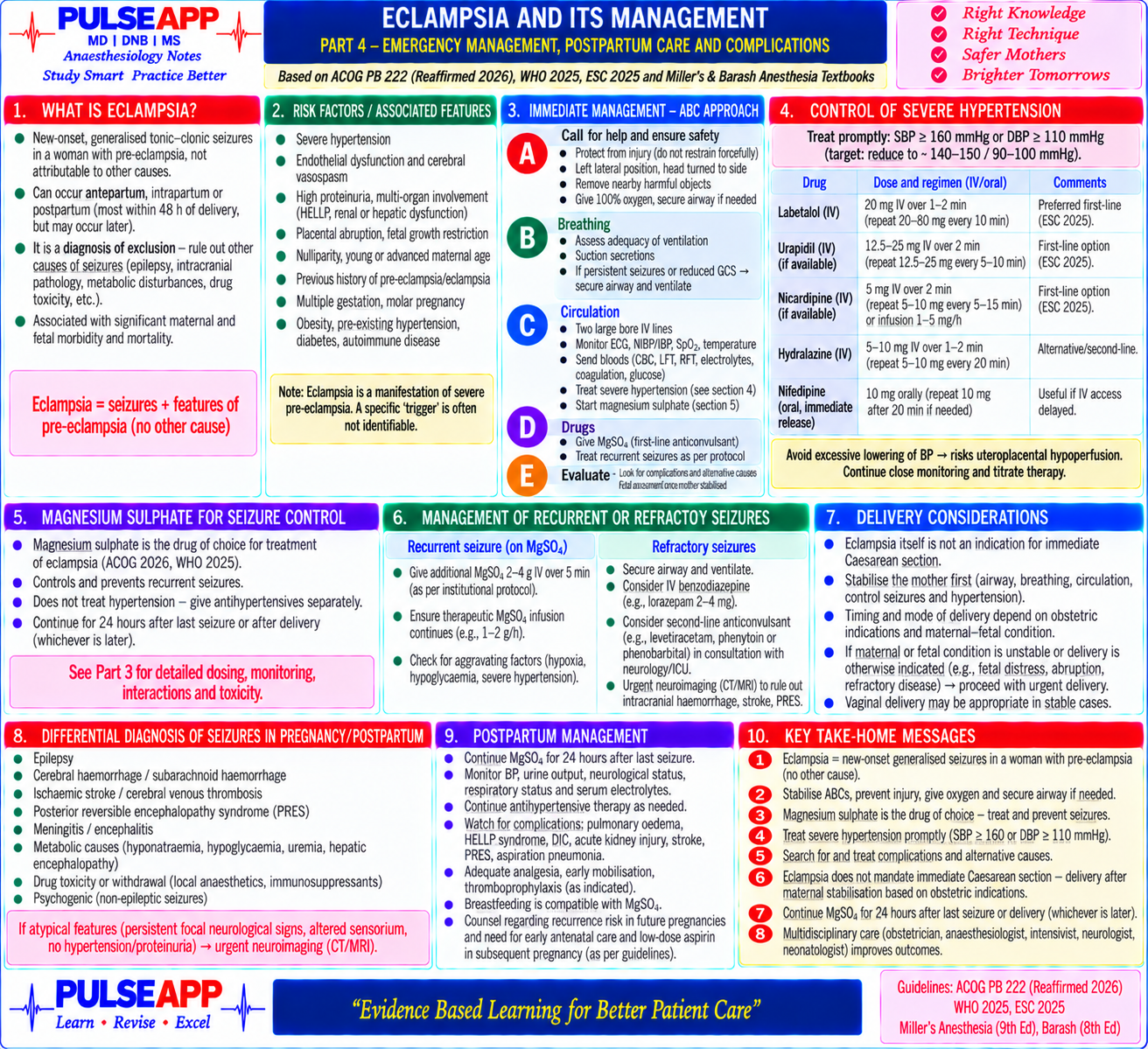
A primigravida at 38 weeks gestation with severe pre-eclampsia develops fetal distress requiring emergency caesarean section (Category 1 CS). She is on magnesium sulphate infusion. Discuss the anaesthetic management including: choice of anaesthesia, modified RSI, fluid management, antihypertensive therapy, and MgSO&#8324; drug interactions.

description Clinical Response
⚙ Core Concept
Emergency Category 1 CS in severe pre-eclampsia on MgSO₄ is the highest-acuity obstetric emergency: fetal compromise (decision-delivery <30 min), severe maternal hypertension (risk of maternal stroke — leading cause of maternal death in pre-eclampsia), and MgSO₄'s pharmacological interactions must all be managed in parallel.
A. Category 1 CS — Time Target and Decision1 mark

RCOG Category 1: immediate threat to mother/fetus; decision-to-delivery target <30 min. If functioning epidural → top-up (fastest); if not, single-shot spinal (5–10 min available) or GA with RSI (immediately life-threatening).

B. Airway — The Obstetric Challenge2 marks

Pre-eclampsia worsens the airway: facial/laryngeal oedema, higher Mallampati class; video laryngoscope first-line.

Modified RSI: attenuate hypertensive response to laryngoscopy with alfentanil 10–20mcg/kg or remifentanil 1mcg/kg or labetalol 10–20mg, plus thiopentone 4–5mg/kg and rocuronium 1.2mg/kg.

C. Spinal Anaesthesia in Pre-eclampsia2 marks
✅ Spinal Is SAFE in Severe Pre-eclampsia
Historical concern about catastrophic hypotension is disproven — pre-eclamptic patients have LESS hypotension after spinal than healthy parturients (high SVR buffers it).

Standard block: heavy bupivacaine 0.5% 2–2.5mL + fentanyl 15–25mcg + morphine 100mcg, T4–T6 level; co-load 500mL with spinal (not pre-load) to avoid pulmonary oedema.

D. MgSO₄ Drug Interactions3 marks
InteractionMechanismManagement
Non-depolarising NMBsMg²⁺ inhibits presynaptic ACh release + reduces end-plate sensitivity → potentiated/prolonged blockReduce dose 30–50%; quantitative TOF; sugammadex (not neostigmine) for reversal
SuccinylcholineReduced fasciculation intensity; onset may be delayed at high Mg²⁺Prefer rocuronium+sugammadex if available
Volatile agentsAdditive CNS/CVS depressionReduce concentration, monitor BIS
Nifedipine (CCB)Additive vasodilation/negative inotropy → profound hypotensionPrefer IV labetalol/hydralazine; monitor closely
E. Antihypertensive Management2 marks

Target: systolic <160mmHg, diastolic <110mmHg; avoid acute MAP reduction >20–25% (uteroplacental perfusion is pressure-dependent).

IV labetalol 20mg boluses (max 300mg, avoid in asthma); IV hydralazine 5–10mg; oral nifedipine 10mg if no IV access.

🎤 Viva Corner
Q. How does magnesium potentiate non-depolarising NMBs, and what are the implications for dosing/reversal?
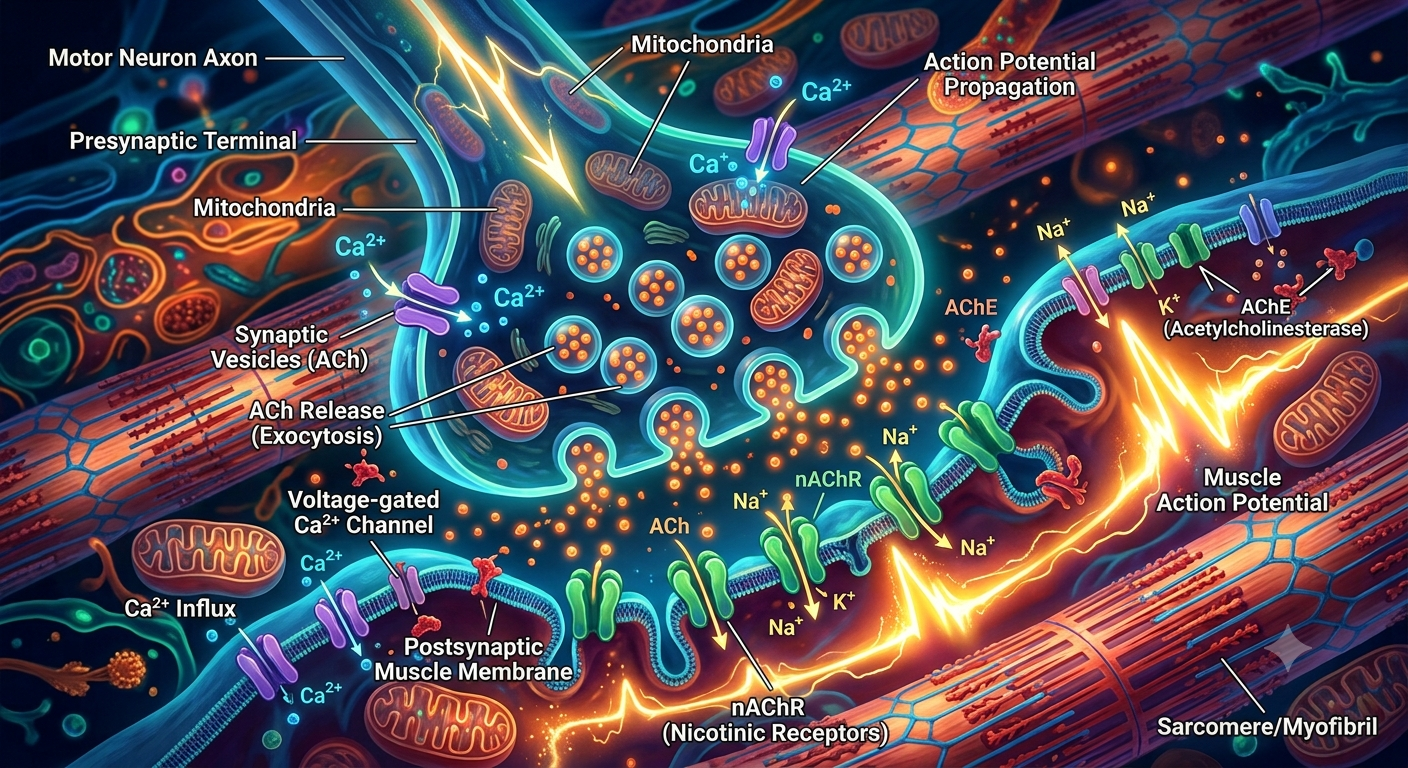
Presynaptically Mg²⁺ inhibits Ca²⁺ entry needed for ACh vesicle release; postsynaptically it reduces end-plate sensitivity to ACh — both mechanisms deepen NDMR block. Implications: reduce initial NDMR dose 30–50%, use mandatory quantitative TOF monitoring, and use sugammadex (not neostigmine, which is impaired by hypermagnesaemia) for reversal.
★ Examiner's Pearl
Spinal safety in pre-eclampsia (disproven hypotension concern) is a frequently tested misconception correction. State both presynaptic and postsynaptic MgSO₄ mechanisms. Antihypertensive target (systolic <160) with rationale (maternal ICH prevention) must be stated.
RCOG Green-top 10a 2019. Magee LA et al (Cochrane 2011). Dyer RA et al (Anesthesiology 2008). Miller's Anaesthesia 9th Ed, Ch 77. CEMACH reports.
lock Protected Clinical Document • Pulse App • Screenshots Strictly Prohibited
QUESTION 8 person Asked by .
bookmark_add

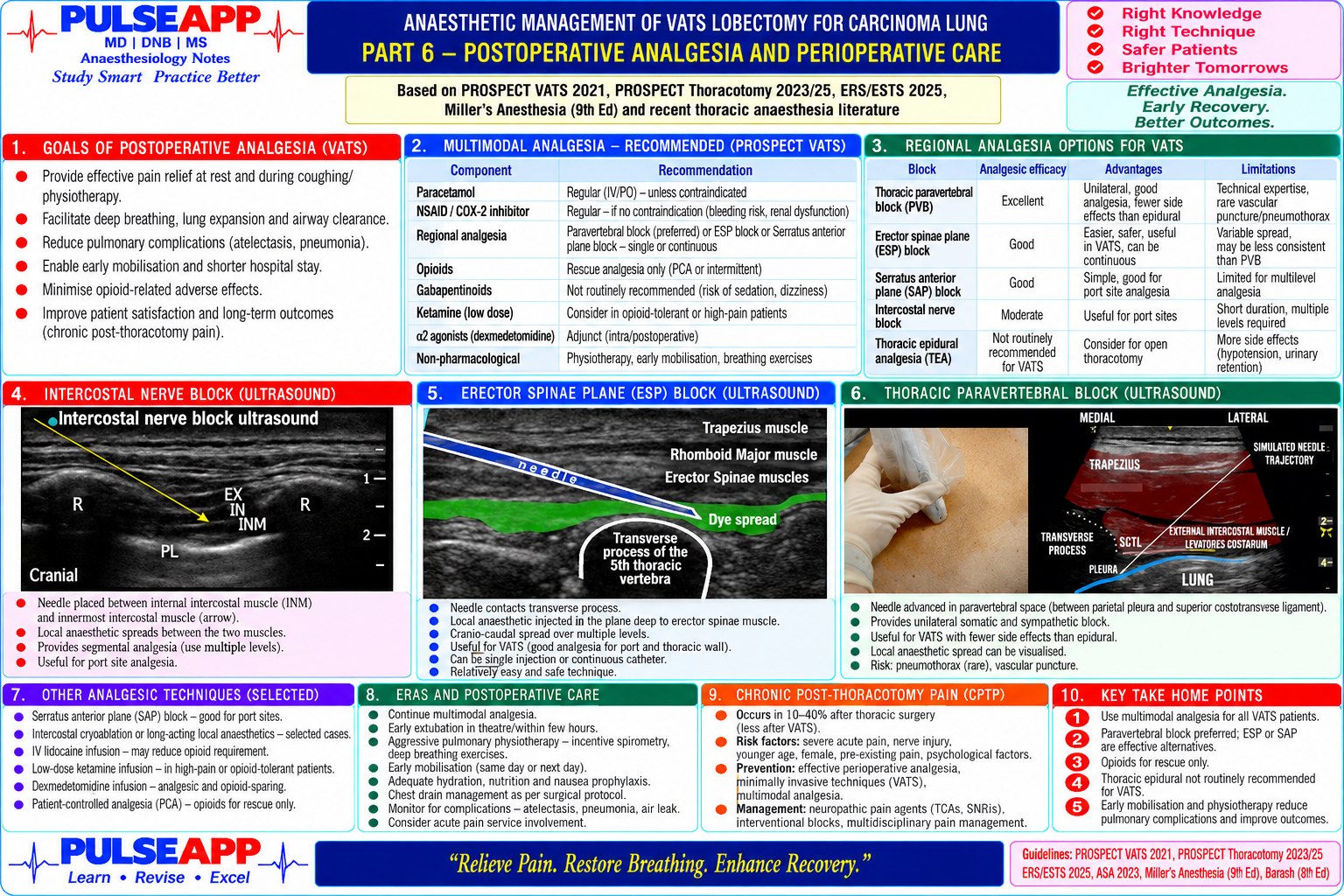
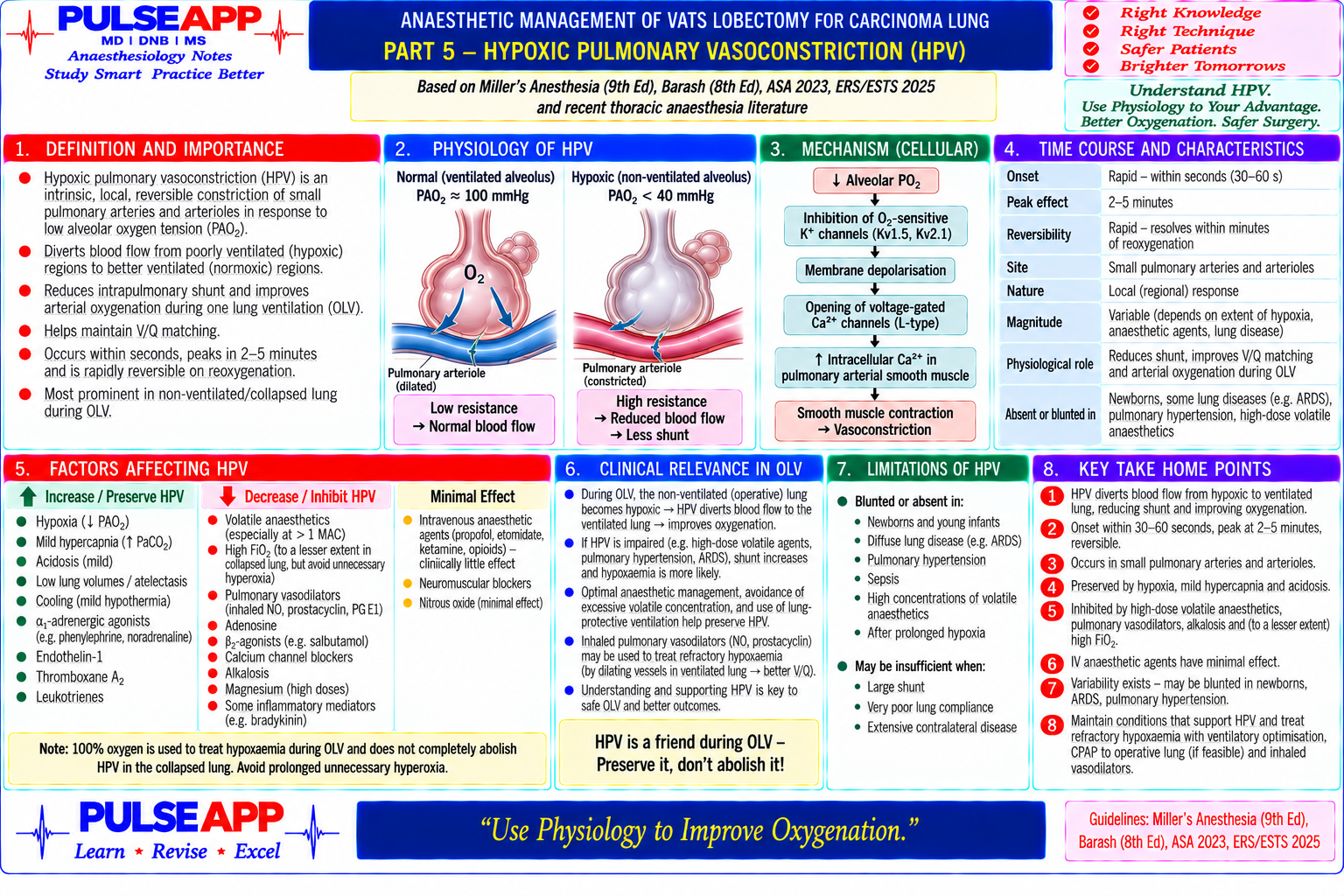
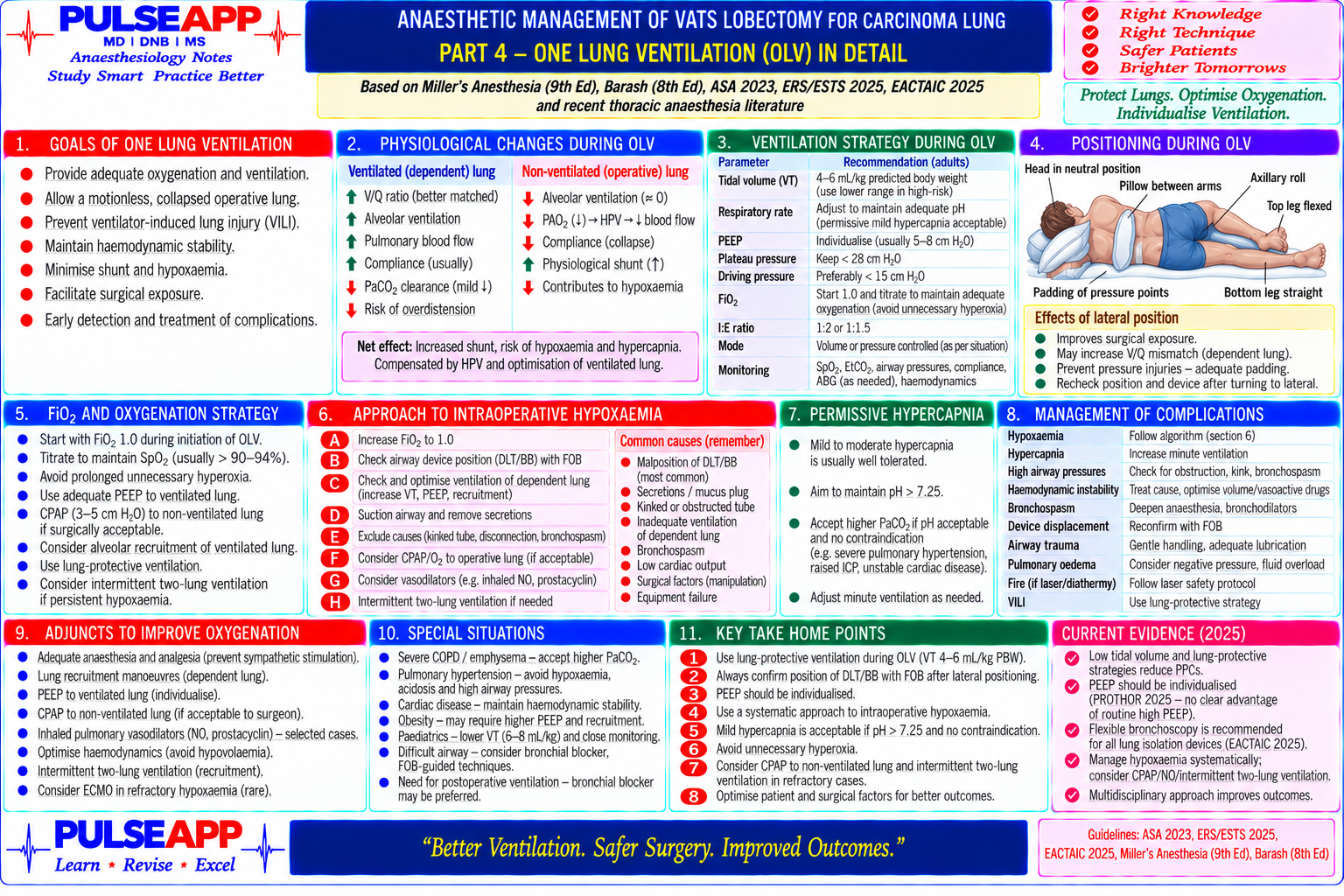
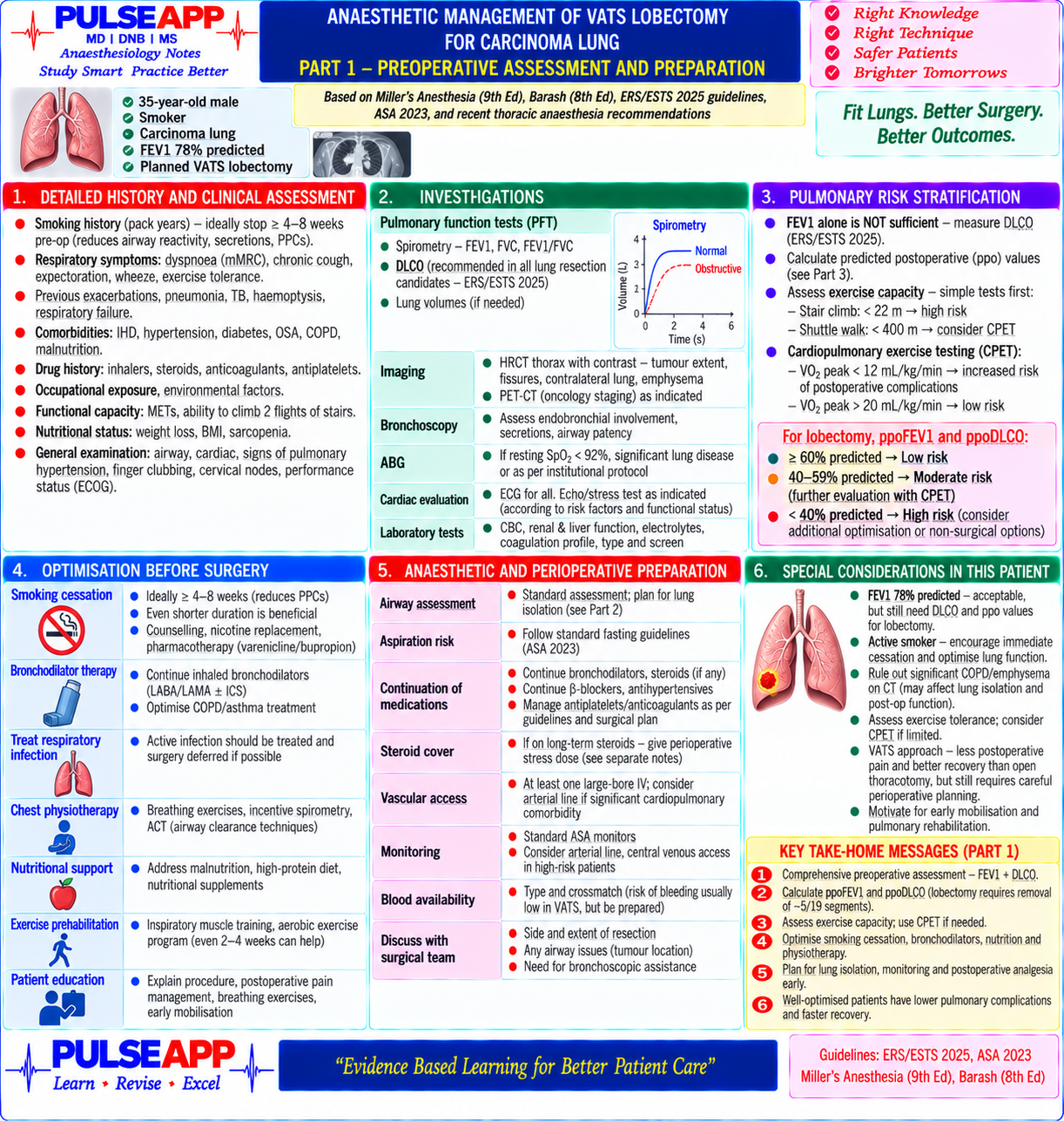
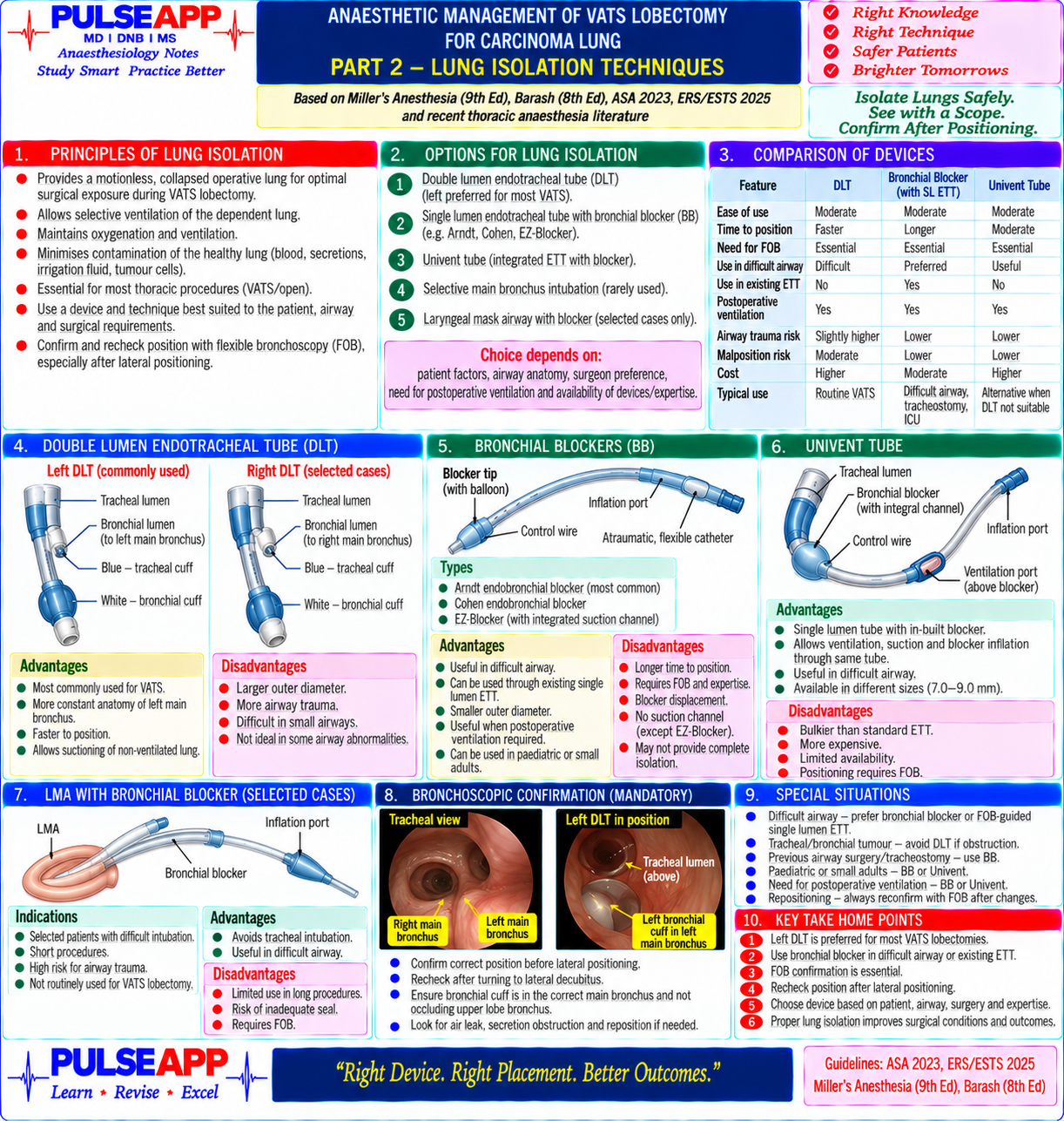
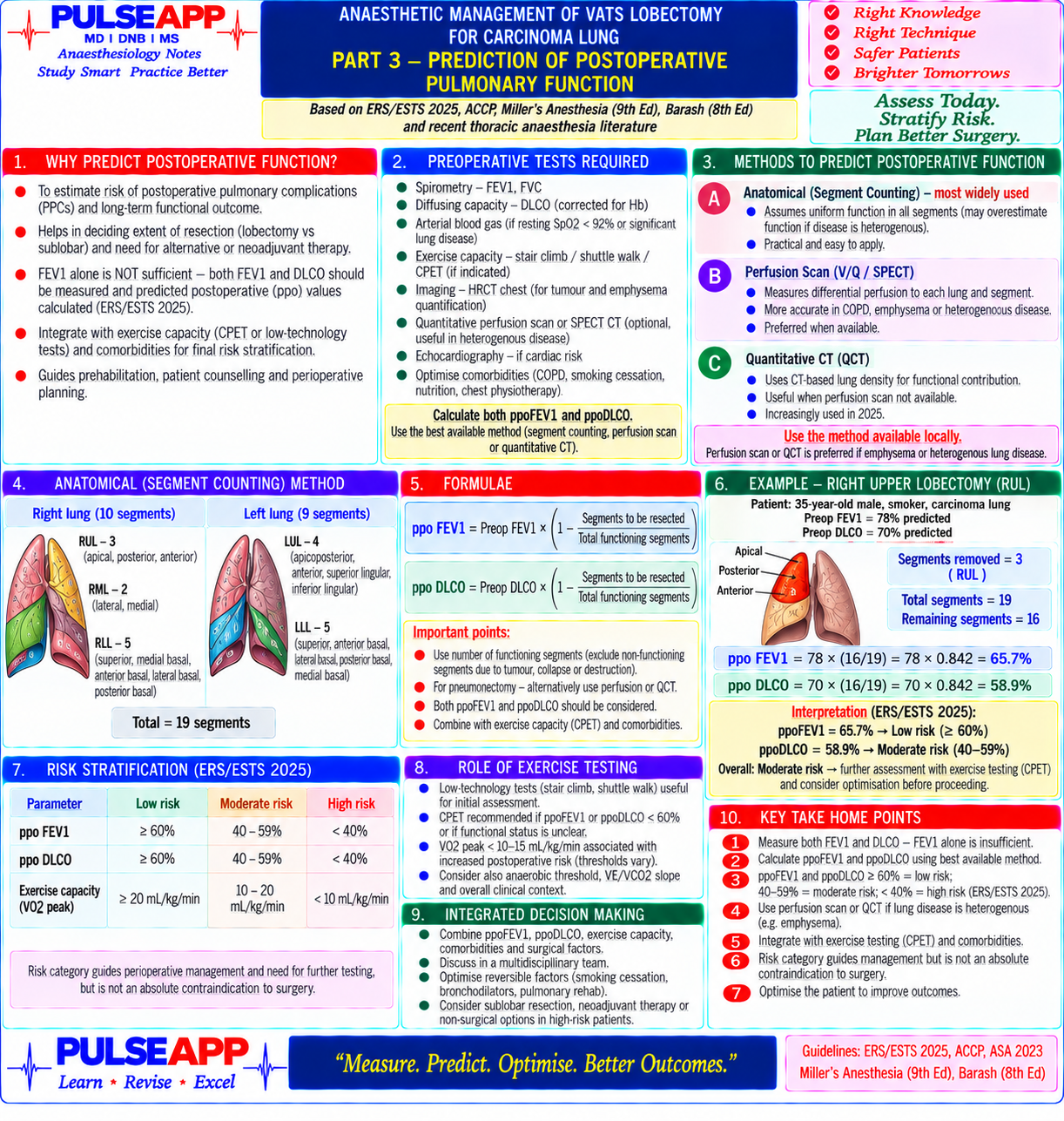
A 35-year-old male smoker with carcinoma lung and FEV1 78% predicted requires VATS lobectomy. Discuss preoperative respiratory assessment, prediction of postoperative pulmonary function, choice of lung isolation device, OLV management, and postoperative analgesia.

collections Question Diagrams & Reference Images (4)
Question Reference Diagram
zoom_in View Image
Question Reference Diagram
zoom_in View Image
Question Reference Diagram
zoom_in View Image
Question Reference Diagram
zoom_in View Image
description Clinical Response
⚙ Core Concept
Thoracic surgery for lung cancer involves the paradox of removing diseased lung in a patient whose reserve may already be compromised. Predicting postoperative lung function is critical: minimum acceptable ppoFEV1 ≥40% and ppoDLCO ≥40% predicted for major resection.
A. Preoperative Respiratory Assessment3 marks
InvestigationFindings/Significance
Spirometry (FEV1/FVC)FEV1 78% = mild obstructive-borderline; optimise with bronchodilators/smoking cessation
DLCOSingle best predictor of postop complications; <40% predicted = very high risk regardless of FEV1
ABGPaO₂<60 or PaCO₂>45 at rest = very high risk
CPET (VO₂max)>20 mL/kg/min low risk; 10–20 moderate; <10 very high risk/inoperable
✅ ppoFEV1 Calculation
ppoFEV1 = preop FEV1 × (1 − segments removed/19). Right lower lobectomy (5 segments): 78% × 0.74 = 57.7% predicted — acceptable (≥40%).
B. Lung Isolation — DLT or Bronchial Blocker2 marks

Left DLT preferred (right DLT risks RUL orifice occlusion), even for right-sided VATS; size 39/41 Fr for male patient; confirm with fibrescope.

Bronchial blocker (Arndt/EZ-Blocker) if DLT placement anticipated difficult.

C. OLV Management3 marks

Dependent lung ventilation: TV 4–6mL/kg IBW, PEEP 5cmH₂O, plateau ≤25cmH₂O, FiO₂ 1.0 initially.

✅ TIVA Preferred for OLV
TIVA (propofol-remifentanil) preserves hypoxic pulmonary vasoconstriction; volatile agents inhibit HPV in the operative lung, worsening shunt and oxygenation.

If hypoxia (<90%): FiO₂ 1.0 → PEEP dependent lung → recruitment → CPAP to operative lung → switch to TIVA → consider brief two-lung ventilation.

D. Postoperative Analgesia2 marks

Thoracic epidural (T4–T6) is gold standard for open thoracotomy; for VATS, paravertebral block (equivalent analgesia, fewer side effects) increasingly preferred.

Serratus anterior plane block (emerging); multimodal with paracetamol/NSAIDs/low-dose opioids.

🎤 Viva Corner
Q. Why is TIVA specifically preferred over volatile anaesthesia for OLV during VATS lobectomy?
Volatile agents dose-dependently inhibit hypoxic pulmonary vasoconstriction (HPV) in the non-ventilated lung via K⁺ channel and NO/prostacyclin effects, allowing blood to continue flowing through the collapsed lung → worse shunt → hypoxaemia. Propofol does not inhibit HPV, preserving diversion of blood to the ventilated lung. Multiple RCTs show 15–25mmHg higher PaO₂ with TIVA vs volatile during OLV.
★ Examiner's Pearl
State the ppoFEV1 formula and threshold (≥40%) and calculate for the given case. TIVA vs volatile HPV mechanism is the most tested OLV pharmacology concept. DLCO as the best single predictor of postop morbidity is key.
Brunelli A et al (Chest 2013). BTS Guidelines 2010. Lohser J (Anesthesiol Clin 2008). Della Rocca G et al (Anesth Analg 2001). Miller's Anaesthesia 9th Ed, Ch 68.
lock Protected Clinical Document • Pulse App • Screenshots Strictly Prohibited
QUESTION 9 person Asked by .
bookmark_add

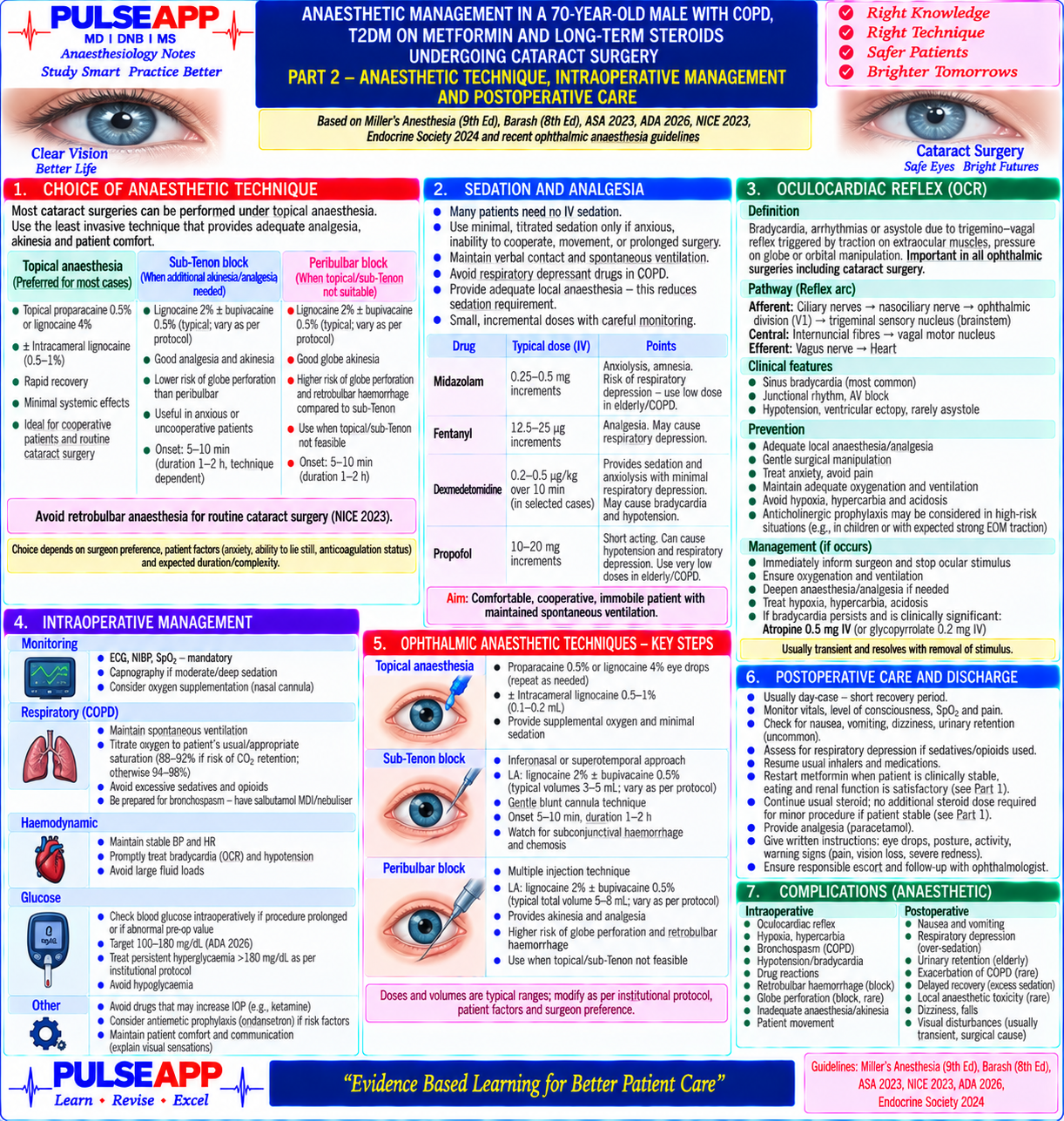
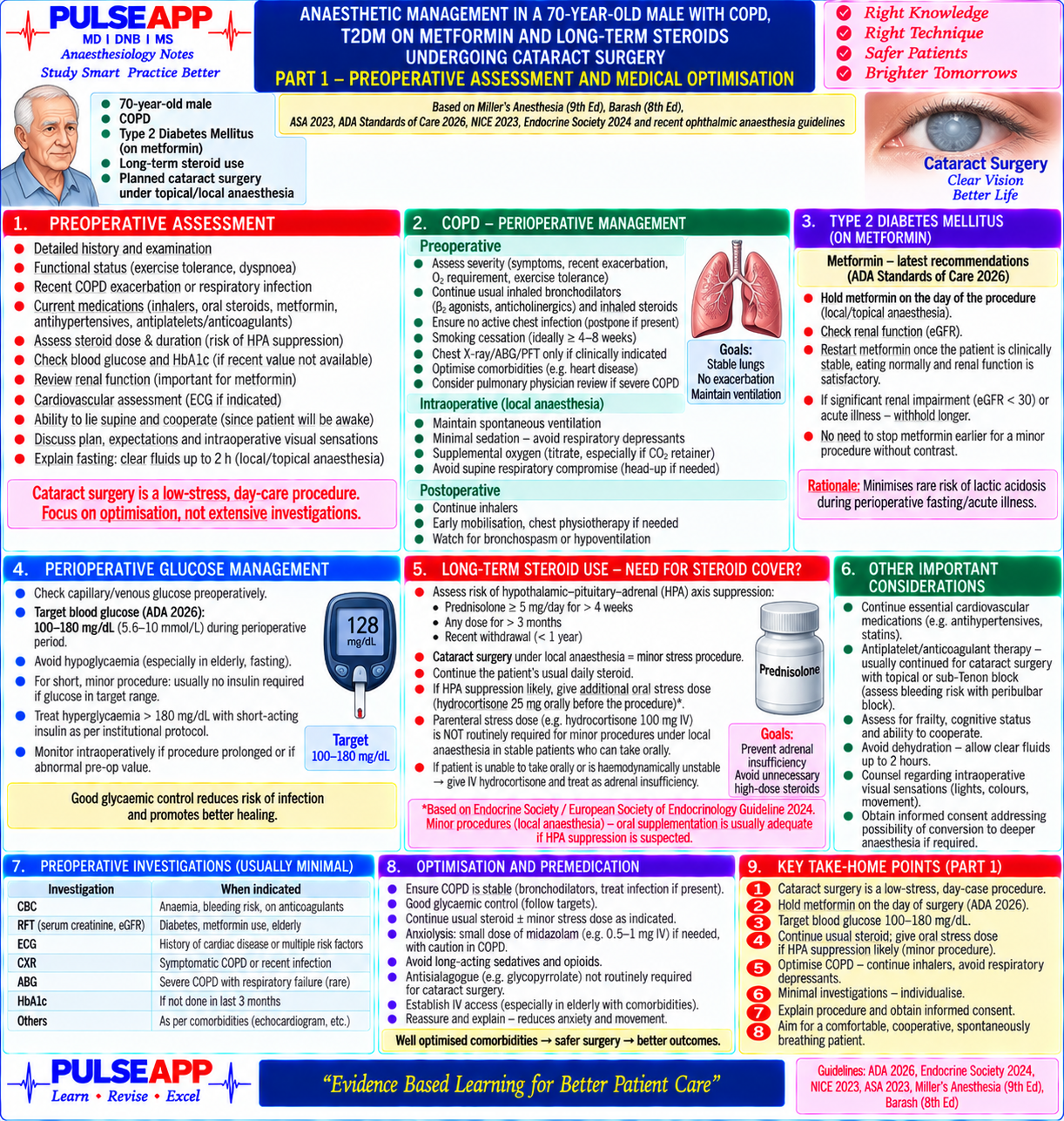
A 70-year-old male with COPD, T2DM on metformin, and long-term steroid use requires cataract surgery under topical/local anaesthesia. Discuss perioperative management including: metformin withholding, steroid cover, blood glucose targets, oculocardiac reflex prevention, and choice of anaesthetic technique.

description Clinical Response
⚙ Core Concept
Cataract surgery (phacoemulsification, 15–20 min under topical anaesthesia) is the world's most commonly performed procedure with minimal physiological disturbance, but this patient's comorbidities (COPD, T2DM, long-term steroids) still require specific perioperative attention.
A. Anaesthetic Technique2 marks
TechniqueMethodIndications for GA
Topical (preferred)Drops + intracameral lidocaine, no injection/needleFailure of topical; uncooperative; complex surgery
Peribulbar blockLA outside muscle cone; complete akinesiaProlonged surgery
General anaesthesiaSupraglottic device, no laryngoscopy neededChildren, intellectual disability, extreme anxiety
B. Metformin — Perioperative Management2 marks

Withheld traditionally due to lactic acidosis risk if renal function deteriorates (metformin accumulates, inhibits Complex I). For minor procedures under topical anaesthesia (no fasting, no contrast) metformin can generally be CONTINUED per updated SIGN/NHS guidance.

C. Steroid Cover2 marks

Long-term steroids suppress the HPA axis — relative adrenal insufficiency under stress. Cataract under topical = MINOR stress (~5–10mg hydrocortisone equivalent) — does NOT require additional cover beyond usual morning dose. If GA used → hydrocortisone 25mg IV at induction (moderate stress).

D. Blood Glucose Management2 marks

Target 6–10 mmol/L perioperatively; usual oral agents continued for this topical anaesthesia case; steroids cause hyperglycaemia — vigilance for postop rise.

E. Oculocardiac Reflex (OCR)2 marks

Trigeminovagal reflex: traction on extraocular muscles/globe pressure → V1 afferent → brainstem → vagal efferent → bradycardia/asystole. Management: surgeon releases traction immediately; atropine 0.3–0.6mg IV if persistent; prophylactic atropine not routinely recommended.

🎤 Viva Corner
Q. Heart rate suddenly falls from 85 to 32 bpm during cataract surgery under topical anaesthesia. What has happened and immediate management?
Oculocardiac reflex from globe manipulation. Immediate action: tell surgeon to STOP all manipulation immediately (most effective single intervention) — HR usually recovers within 30–60s. Monitor continuously (ECG/SpO₂ mandatory even under topical anaesthesia). If bradycardia persists >30s: atropine 0.3–0.6mg IV (or IM if no IV access). If recurrent: consider peribulbar block to interrupt the afferent trigeminal arc.
★ Examiner's Pearl
OCR reflex arc (trigeminal V1 afferent → brainstem → vagal efferent) must be stated mechanistically. Updated metformin guidance (can continue for minor topical procedures) is a specifically tested update. Steroid cover: topical cataract = minor stress = no extra cover; GA = moderate stress = hydrocortisone 25mg IV.
SIGN 55 2021. Cunningham AJ et al (BJA 1980). RCOphth Guidelines 2022. Miller's Anaesthesia 9th Ed, Ch 80.
lock Protected Clinical Document • Pulse App • Screenshots Strictly Prohibited
QUESTION 10 person Asked by .
bookmark_add

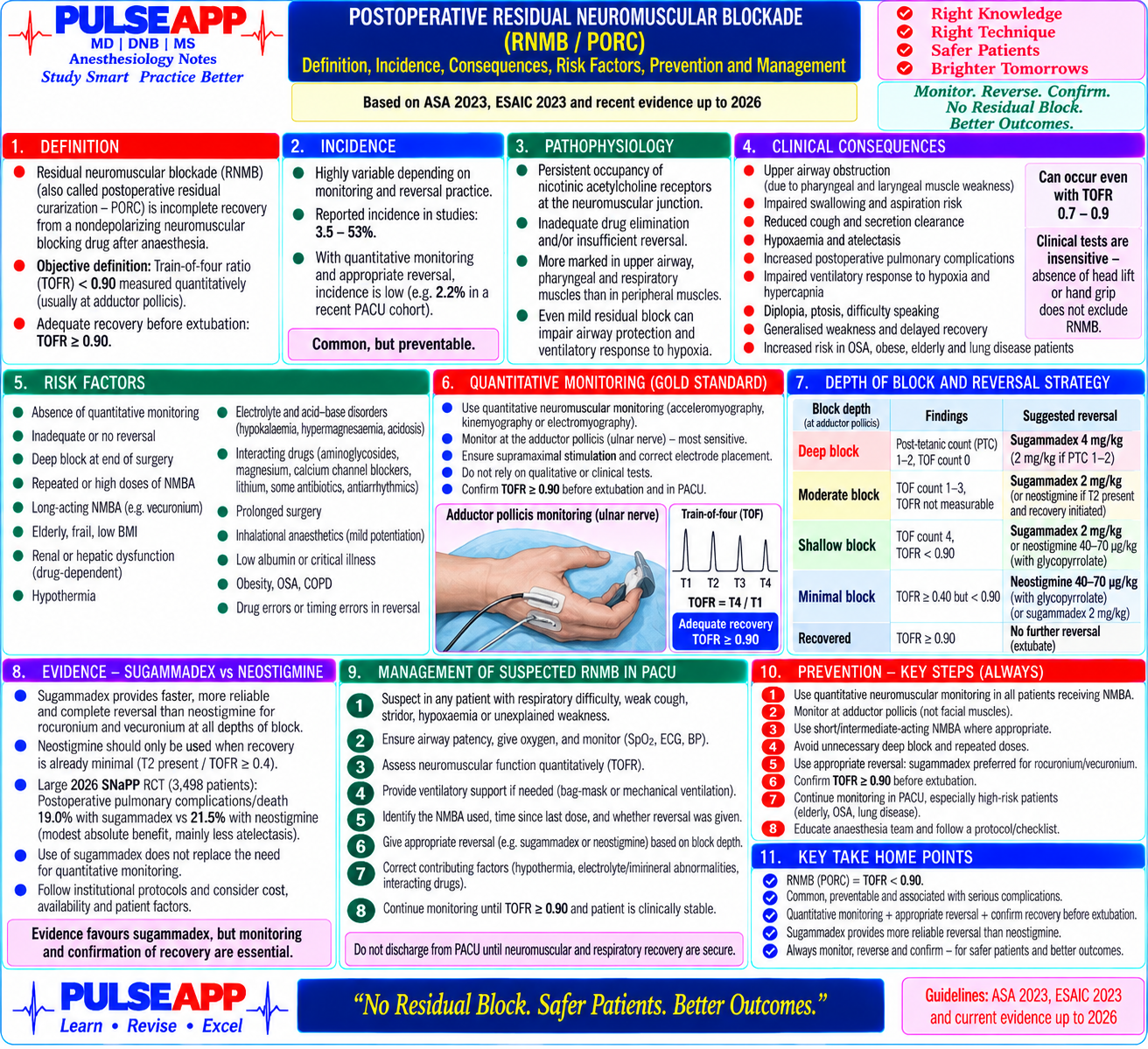
Define postoperative residual neuromuscular blockade (PRNB/PORC). Describe its incidence, clinical consequences, risk factors, diagnostic criteria, and evidence-based prevention and management strategies.

collections Question Diagrams & Reference Images (2)
Question Reference Diagram
zoom_in View Image
Question Reference Diagram
zoom_in View Image
description Clinical Response
⚙ Core Concept
PRNB (TOF ratio <0.9 measured quantitatively) is one of the most common, underappreciated perioperative complications — approximately 20–40% of patients in PACU have clinically significant residual block despite appearing clinically adequate. PRNB doubles the incidence of critical respiratory events in PACU.
A. Definition and Incidence2 marks

Definition: TOFR <0.9 at extubation/recovery, measured by quantitative monitoring (acceleromyography/EMG) at adductor pollicis.

Incidence: 20–40% with clinical criteria alone; ~40% with neostigmine reversal; >98% achieve TOFR≥0.9 within 3 min with sugammadex 2mg/kg.

B. Clinical Consequences2 marks
  • Upper airway obstruction — genioglossus/pharyngeal dilators more sensitive than adductor pollicis; impaired at TOFR 0.7–0.8
  • Impaired swallowing/aspiration — cricoarytenoid sensitivity
  • Blunted hypoxic ventilatory response (~50% of normal at TOFR<0.9)
  • Hypoventilation and CO₂ retention
  • Grosse-Sundrup (Lancet 2012): sugammadex vs neostigmine reduced pneumonia, reintubation, unplanned ICU admission
C. Risk Factors2 marks
Risk FactorMechanism
Long-acting NMBs (pancuronium)Highest PRNB incidence
Inadequate reversal dose/timingIncomplete reversal
Absence of quantitative monitoringPRNB undetectable clinically
HypothermiaSlows metabolism, prolongs block, reduces neostigmine efficacy
Renal/hepatic failureImpaired NMB elimination — use atracurium/cisatracurium
Drug interactionsAminoglycosides, magnesium, CCBs potentiate block
D. Prevention and Management4 marks
StrategyRecommendation
Quantitative NMJ monitoring (mandatory)Confirm TOFR≥0.9 before extubation — only reliable method
Sugammadex for aminosteroids2mg/kg (TOF≥2) — TOFR≥0.9 in >98% within 3 min
Neostigmine (if sugammadex unavailable)0.04–0.07mg/kg only if TOF≥2; co-administer glycopyrrolate; confirm TOFR≥0.9 quantitatively
Intermediate-acting NMBsRocuronium/cisatracurium preferred over pancuronium
Avoid unnecessary deep blockTitrate to surgical need using TOF monitoring
🎤 Viva Corner
Q. Why are clinical criteria (5-second head lift, grip strength, tidal volume) inadequate to rule out significant PRNB?
These tests assess pharmacologically MORE RESISTANT muscle groups (neck, extremities) while the clinically critical airway-protective muscles (genioglossus, cricopharyngeus) are pharmacologically MORE SENSITIVE and remain impaired despite normal clinical tests. At TOFR 0.7–0.9, all conventional tests appear normal yet upper airway obstruction and aspiration risk persist — only quantitative TOFR≥0.9 provides genuine safety assurance.
★ Examiner's Pearl
PRNB incidence with quantitative monitoring (20–40%) is a specific tested statistic. Grosse-Sundrup Lancet 2012 (sugammadex vs neostigmine outcomes) is the landmark trial. Genioglossus sensitivity explanation for why head lift is inadequate is a key mechanistic point.
Murphy GS et al (Anesth Analg 2010). Grosse-Sundrup M et al (Lancet 2012). Naguib M et al (Anesthesiology 2018). Miller's Anaesthesia 9th Ed, Ch 34.

Showing 110 of 337 questions

arrow_back Prev 1 2 3 34 Next arrow_forward
account_tree

Subcategory Tree

Explore Anesthesia subcategories

folder_special Anesthesia
Main
lock

Category Subscription

Subscribe to Anesthesia to unlock this module and all nested subcategories.

  • check_circle Access Anesthesia & all subcategories
  • check_circle Detailed, Peer-Reviewed Answers
  • check_circle High-yield visual aids & imaging
Get Category Subscription arrow_forward
Secure 256-bit SSL Connection

Anatomical Models

Explore high-fidelity 3D visualizations included in premium modules.

Case Reviews

Real-world clinical scenarios narrated by senior consultants.

Pulse App